
Best Faux Interiors for a Sustainable Rustic Look
Faux materials are often dismissed for looking artificial. That only applies to low-quality versions. The right faux materials solve problems that natural materials create: movement, staining, and maintenance, while still delivering texture and variation.
The goal isn’t to copy natural materials perfectly. It’s to use them where they perform better and still support a rustic direction.
What “faux” actually means in high-end interiors
In higher-end projects, faux materials are engineered surfaces: wood veneers over stable cores, porcelain that replicates stone, and mineral-based wall finishes designed to mimic plaster or limewash.
What separates good from bad is surface quality. Look for:
Matte or low-sheen finishes
Irregular variation (not repeating patterns)
Subtle color shifts instead of high contrast
In organic modern interior design LA, these materials are used to control maintenance while keeping a natural palette.
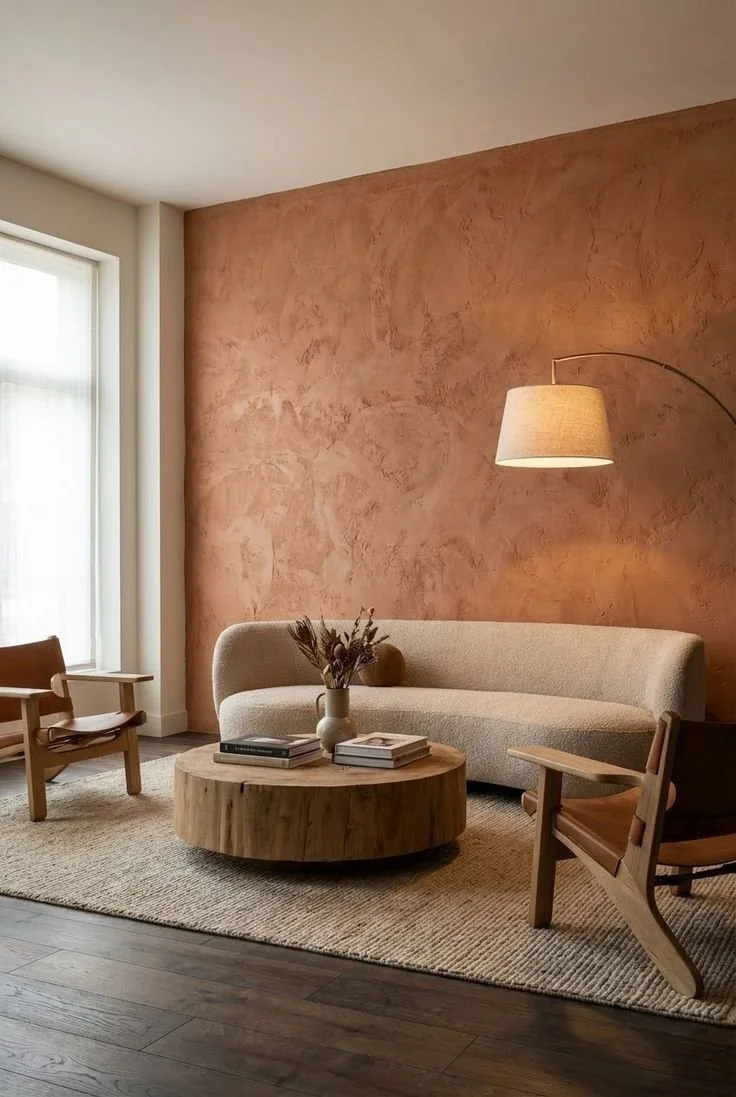
Where faux wood works better than solid wood
Use engineered wood flooring instead of solid planks in most cases. It’s more stable and less likely to gap or warp, especially in the best materials for luxury homes in California climate, where temperature and humidity vary.
For cabinetry, use wood veneer on MDF or plywood for large panels. This prevents warping and keeps seams tight. It’s a standard approach in custom millwork design ideas LA for flat-panel kitchens and built-ins.
Use solid wood selectively: drawer fronts, handles, or smaller details where movement won’t cause issues.
Avoid:
Wide solid wood panels
Low-quality laminates with repeated grain patterns
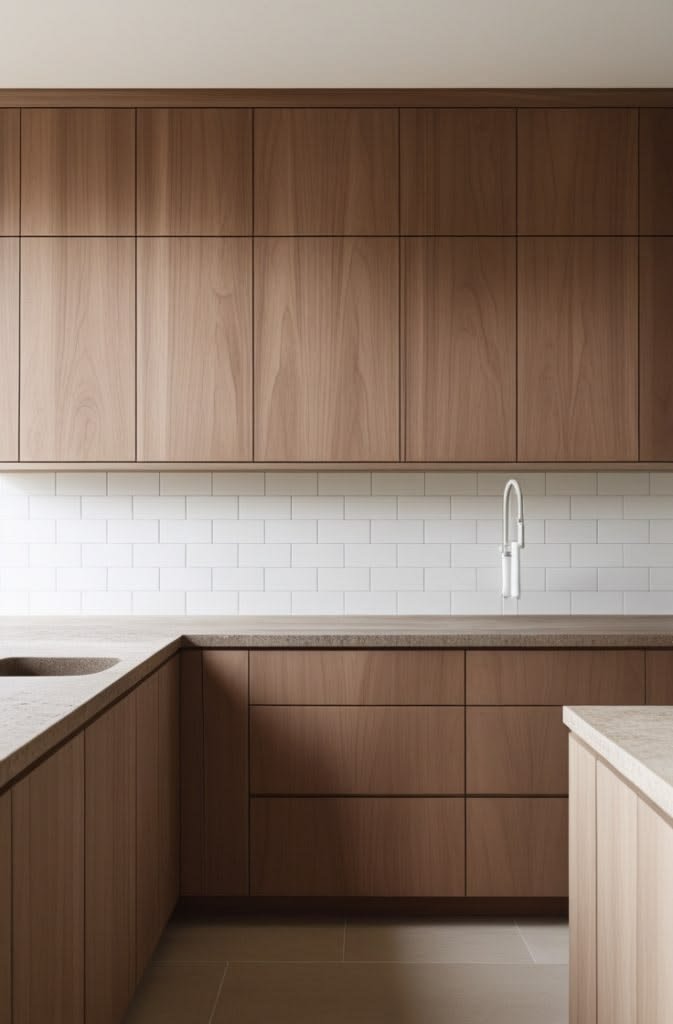
Photo Via: Fix the Disposal
When to choose porcelain or plaster-style finishes
Use porcelain instead of natural stone in high-use areas. It resists staining, doesn’t require sealing, and handles heat and moisture better.
Choose it for:
Kitchen countertops and backsplashes
Bathroom walls and floors
Use plaster-style or limewash-style finishes on walls where you want depth without adding heavy texture. In warm modern interior design LA, these finishes replace rough stone or reclaimed wood walls, which can feel dated when overused.
Avoid mixing too many textured wall finishes in one space. Pick one and keep the rest simple.
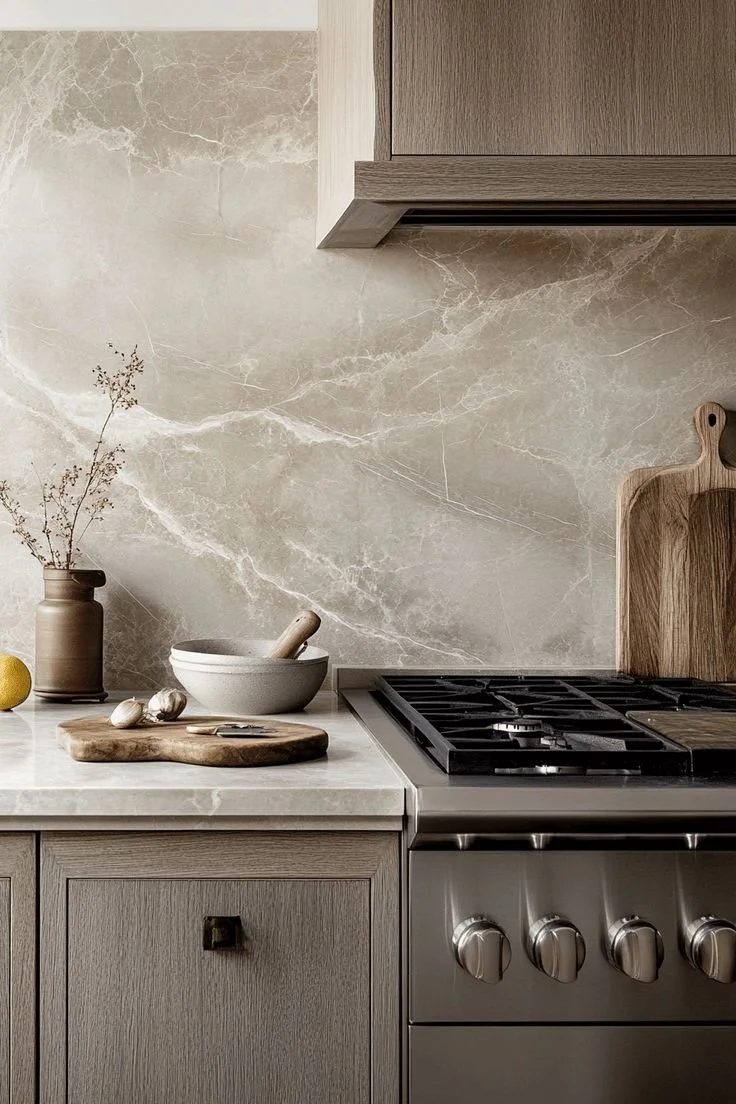
Photo Via: Courtney’s World
What to use in kitchens, bathrooms, and outdoor spaces
Match the material to the level of wear:
Kitchens: porcelain surfaces, sealed veneers, engineered wood flooring
Bathrooms: porcelain tile, moisture-resistant substrates, minimal exposed wood
Outdoor-adjacent spaces: porcelain pavers or tiles that can handle temperature changes
This is critical in indoor-outdoor luxury living design, where materials are exposed to sun, moisture, and frequent use.
If a surface will get wet or heavily used, choose performance over authenticity.
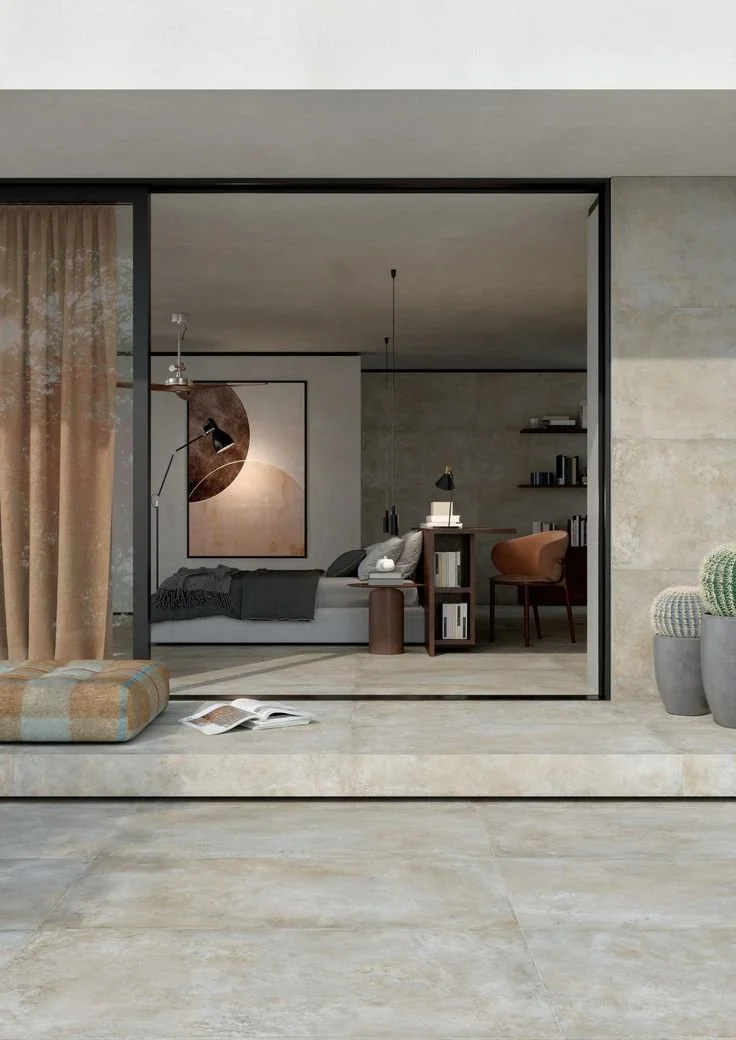
Photo Via: Marazzi
How to avoid a heavy or dated rustic look
Limit the number of rustic elements. Use one or two materials with texture, then keep everything else simple.
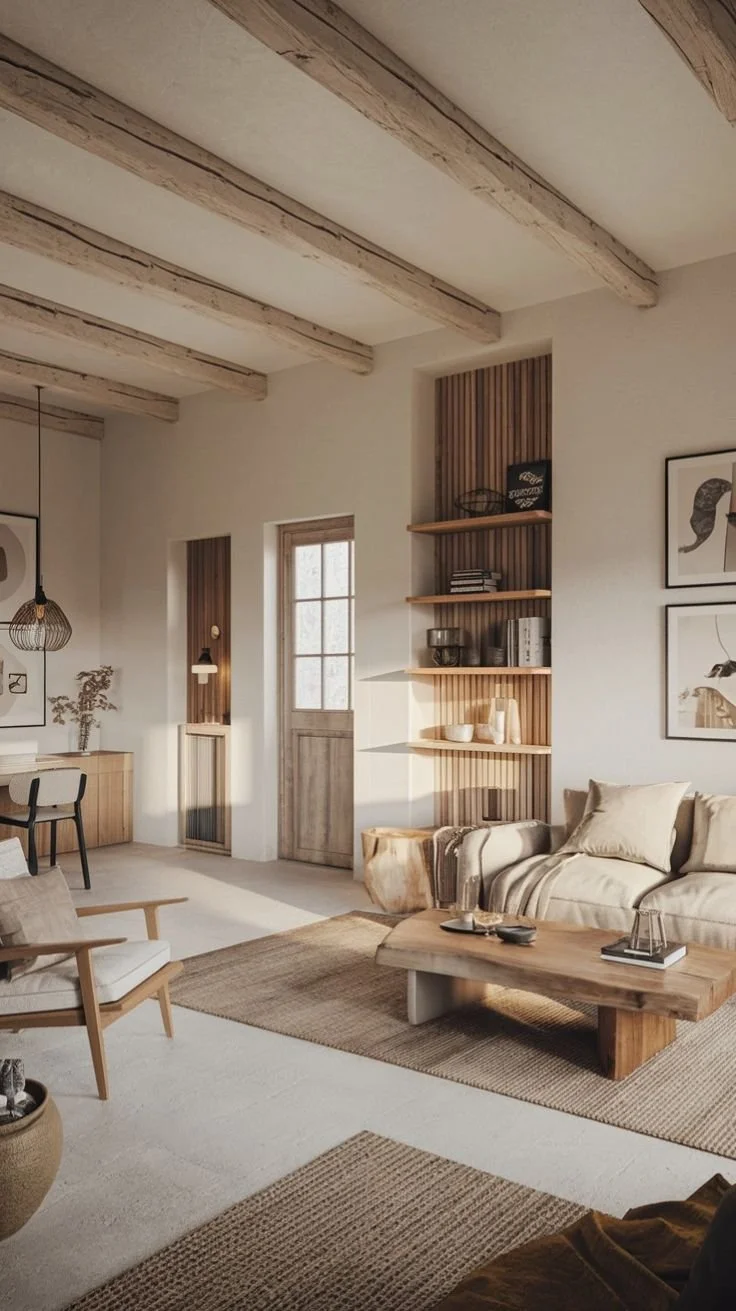
For example:
Wood floor + plaster wall = works
Wood floor + stone wall + reclaimed beams + textured tile = too much
In organic modern interior design LA, restraint keeps the space modern. Too many rustic references push it toward a themed look.
An interior designer for luxury spec homes Los Angeles will typically prioritize consistency, with fewer materials used well, over layering multiple textures.