
All the Things You Can Do With Cowhide
Cowhide gets dismissed too quickly. The assumption is that it belongs in rustic or western interiors. The issue isn’t the material but how it’s used. When applied in small, deliberate ways, cowhide adds variation that flat materials like wood, stone, and paint can’t provide on their own.
The mistake is using too much of it or placing it like a focal feature. It works best as contrast.
Use cowhide rugs to break up large floor areas
Cowhide rugs are most effective in rooms with uninterrupted flooring: wide plank wood, polished concrete, or large-format stone. These surfaces can feel flat over large spans. A cowhide rug introduces pattern without adding color.
Don’t center it like a traditional rug. Place it partially under a coffee table, angle it slightly, or position it beside a bed. It should intersect with furniture, not sit isolated.
For proportion: a standard cowhide (about 6–7 feet wide) works best in smaller seating areas. In larger rooms, layer it over a neutral flatweave so it doesn’t feel undersized.
In custom home interiors Los Angeles, this is a common way to add variation without disrupting a restrained palette.
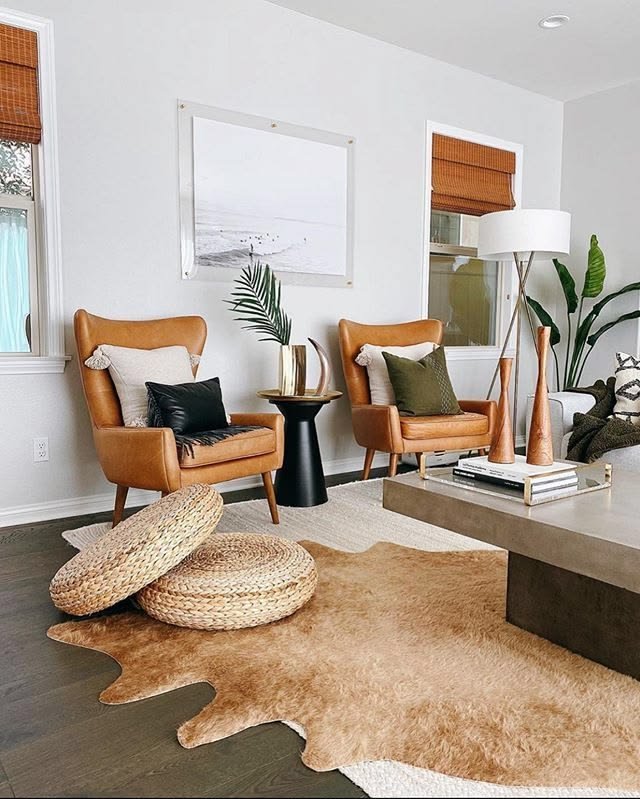
Photo Via: Shine Rugs
Limit cowhide upholstery to one key piece
Use cowhide on a single piece of furniture per room. A lounge chair, bench, or headboard works well because it keeps the material at eye level without spreading it across the entire space.
Avoid sofas or multiple chairs in cowhide. That’s where the room starts to feel heavy and overly styled.
In warm modern interior design LA, a cowhide chair is often paired with wood, linen, or leather seating so the contrast feels deliberate, not repetitive.
If the room already has a strong pattern like heavily veined marble or a bold rug. Skip cowhide entirely. It will compete instead of adding balance.
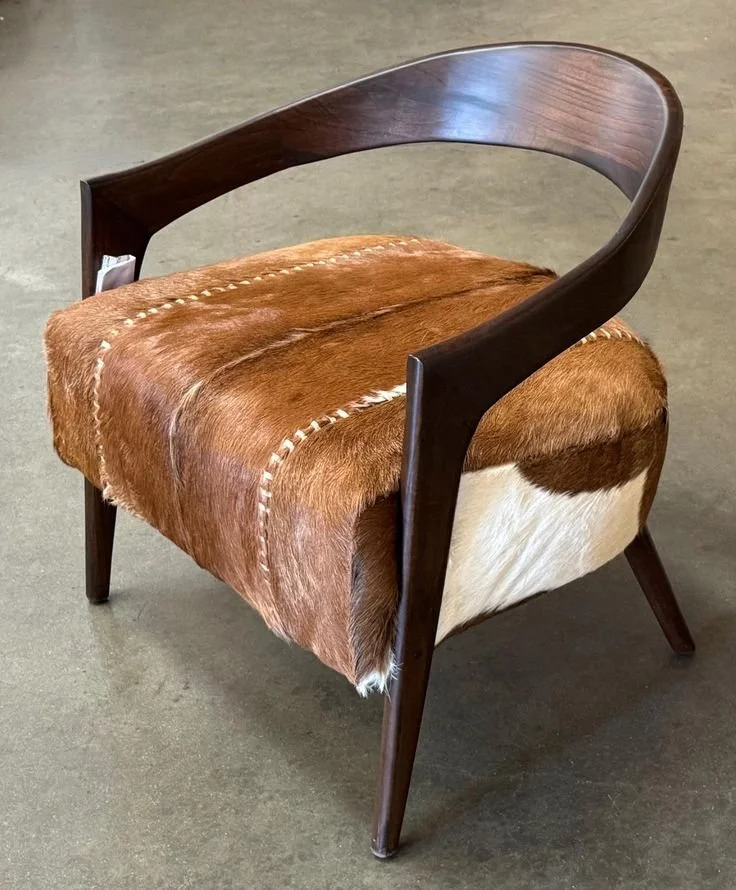
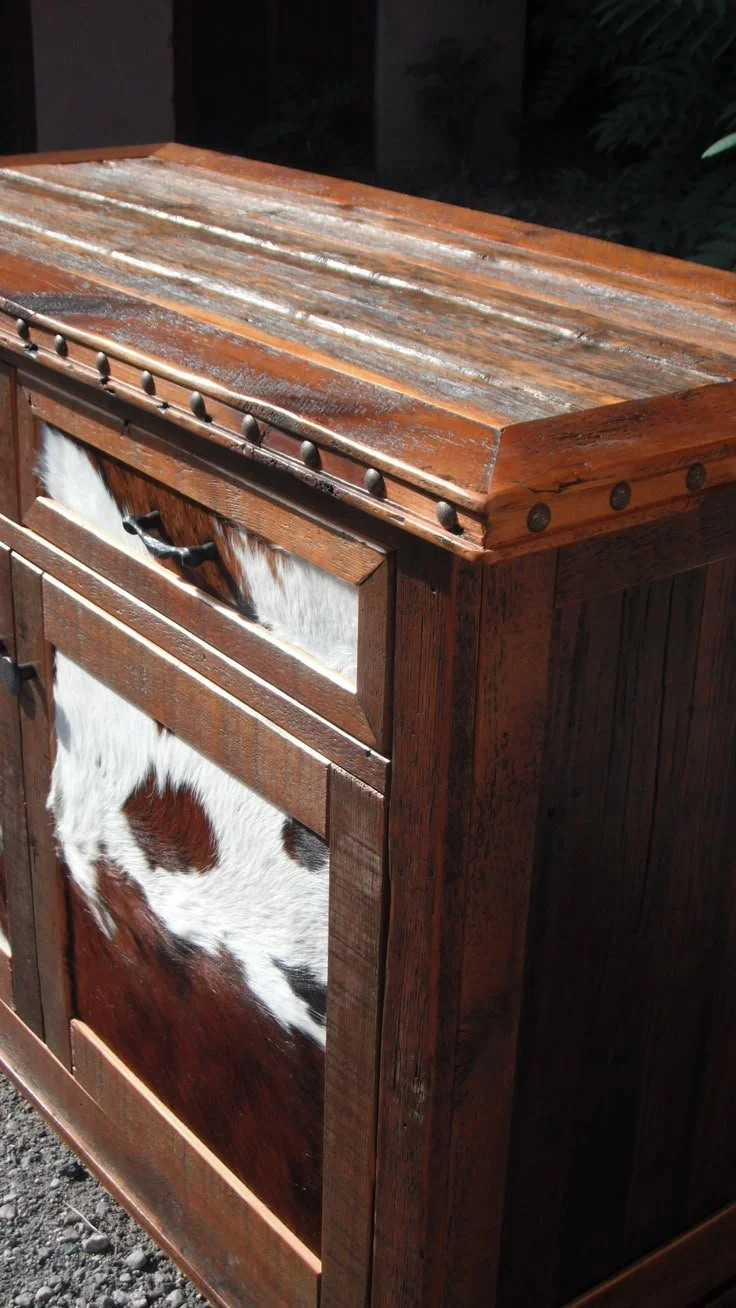
Use cowhide in small, controlled accents
If you’re unsure, use cowhide in smaller applications. Pillows, ottomans, or cabinet insets give you texture without committing to a large surface.
This approach works well in custom millwork design ideas LA. For example, a single cabinet panel or a wardrobe insert in cowhide can break up flat painted surfaces without taking over the design.
Avoid repeating these accents throughout the same room. One or two is enough.
Pair cowhide with structured, modern finishes
Cowhide needs contrast to work well. Pair it with materials that have clean lines and consistent surfaces—plaster, oak, walnut, limestone, or matte metal.
In organic modern interior design LA, this balance is critical. The hide introduces variation, while the surrounding materials keep the space controlled.
Avoid pairing cowhide with other highly textured or distressed materials. That combination pushes the space toward a rustic look quickly.
An interior designer for luxury spec homes Los Angeles will typically keep everything around the cowhide restrained so it doesn’t compete for attention.
Get the scale and placement right
Scale is where most mistakes happen. If the hide is too small, it feels disconnected. If it’s too large, it dominates the room.
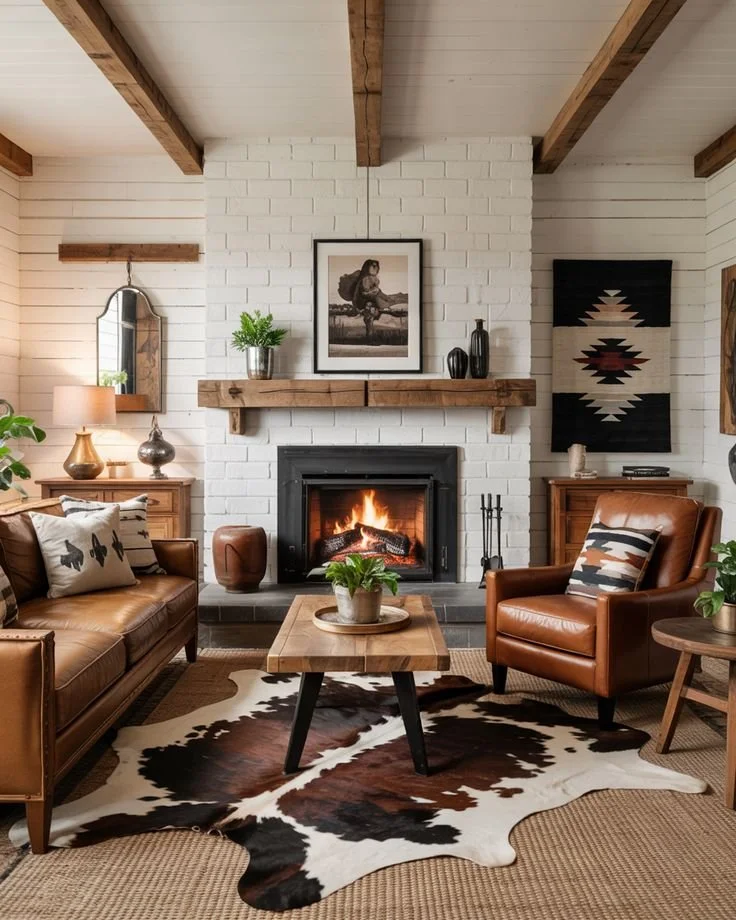
Photo Via: Nimorix
Use these guidelines:
At least one edge of the cowhide should sit under furniture
Don’t float it in the middle of the room
Keep it away from tight walkways where edges will curl or wear unevenly
Cowhide is durable and easy to maintain. Regular shaking and occasional vacuuming is enough. But placement matters more than durability. If it’s positioned correctly, it will look integrated. If not, it will feel like an add-on.