
Rugs and Textiles: How Different Textures Change a Room
Texture is usually the last thing people think about, but it’s often what makes a room feel finished. Paint color gets attention. Furniture size gets debated. Meanwhile, the rug quietly determines whether the whole space feels grounded or slightly off.
In many modern luxury interior design Los Angeles projects, texture is what keeps a minimal space from feeling flat.
Rugs That Set the Tone Early
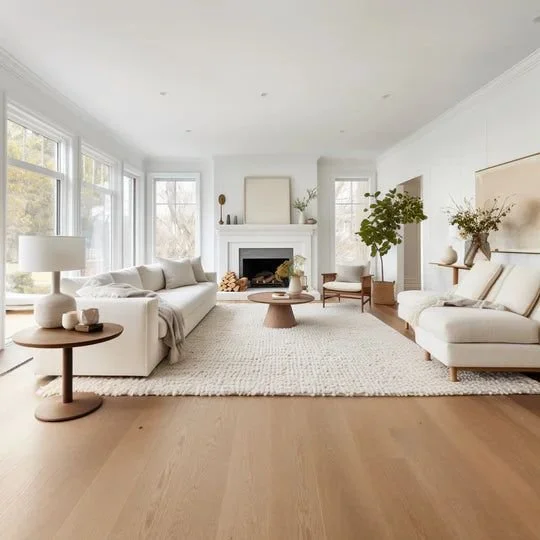
A rug does more than protect flooring. It sets the scale of the room. Too small and everything floats. Too plush and it competes with the furniture.
In minimalist luxury home design, designers often lean toward large, low-pile wool rugs in neutral tones. They don’t distract, but they soften acoustics and visually pull seating together. In open-plan homes, that definition matters.
The size usually surprises clients. It’s almost always bigger than expected.
Layering Without Making It Busy
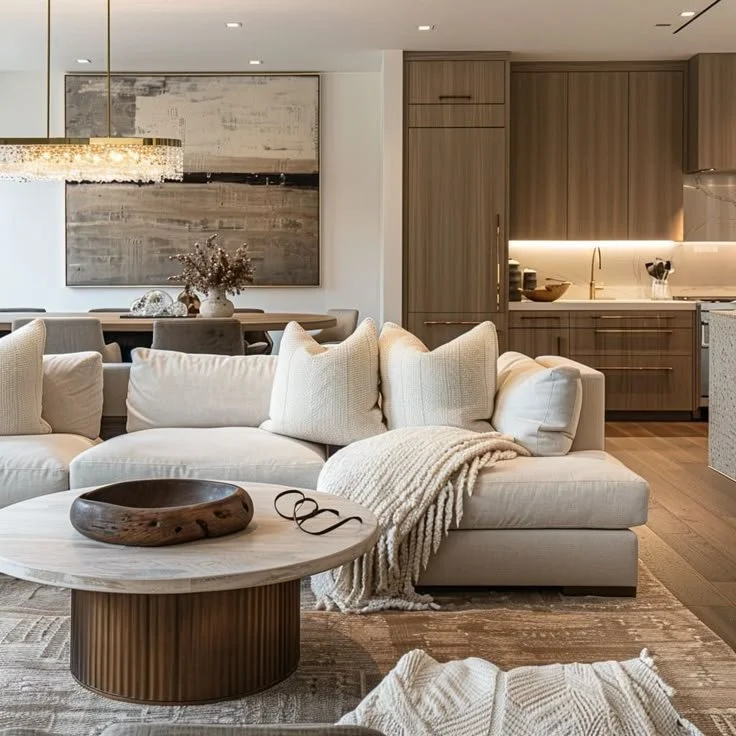
Layering textiles works when materials contrast subtly. Linen against leather. Bouclé next to smooth cotton. Nothing overly patterned.
This approach shows up often in organic modern interior design Los Angeles, where rooms rely on natural fibers rather than strong color. Throws and cushions aren’t there to decorate. They introduce slight shifts in texture that catch light differently throughout the day.
It’s intentional. When every pillow competes, the room starts to look staged instead of lived in.
Texture in Kitchens and Bathrooms
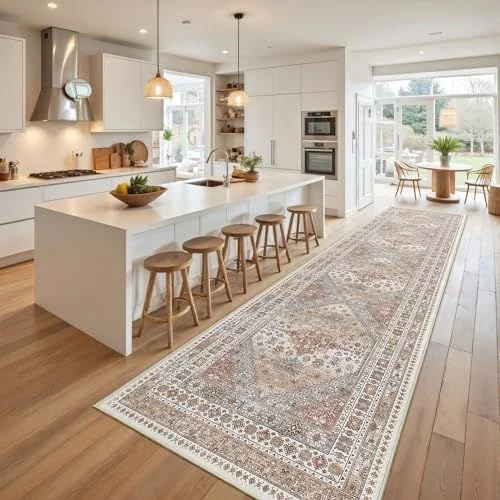
Hard surfaces dominate kitchens and bathrooms — stone, tile, metal. That’s exactly why textiles matter more than people expect.
In luxury kitchen design Los Angeles, a flat-weave runner can soften a long galley without interrupting circulation. Thick towels and subtle bath mats bring warmth to bathrooms without adding visual clutter.
It’s about function, not decoration. Softer layers absorb sound and help larger spaces feel less echo-prone and more comfortable to use every day.
Custom Textiles and Proportion
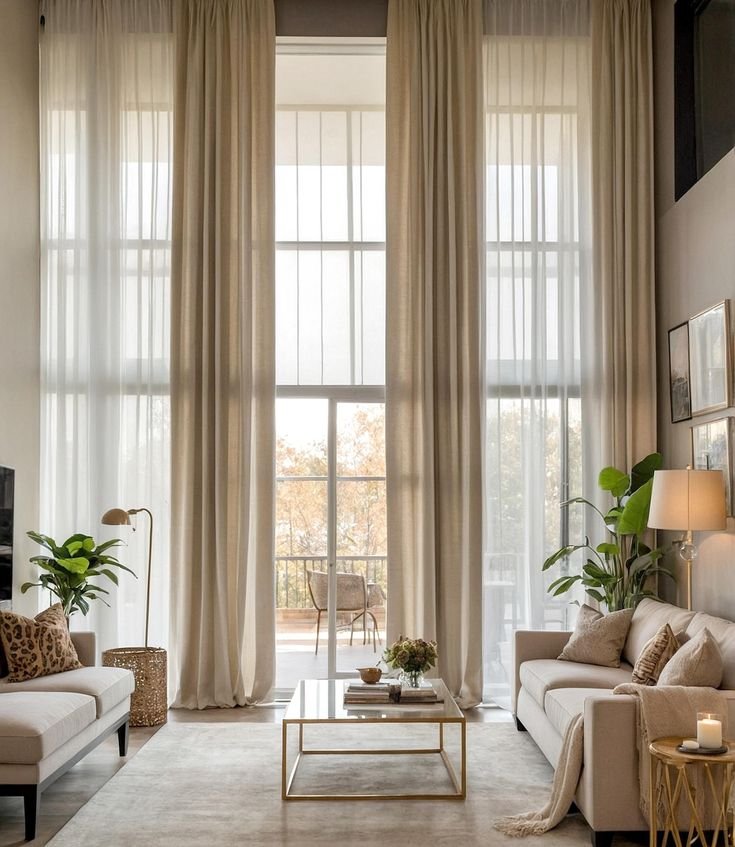
Photo Via: Etsy
Custom drapery changes scale instantly. When panels extend floor to ceiling, ceilings feel taller. When fabric puddles slightly, the space reads softer.
In custom interior design Los Angeles, textile selection often happens alongside architectural decisions. Window height, sunlight exposure, and wall color all influence fabric weight.
This is where proportion matters most. The wrong fabric can feel heavy. The right one almost disappears but improves everything around it.
Rugs and textiles rarely get credit for shaping a room. But once they’re right, the furniture feels better placed. The lighting feels warmer. And the space feels settled, even if nothing else changes.