
The Best Plants for a Low-Water Garden Design in Los Angeles
A low-water garden in Los Angeles needs more than drought-tolerant plants. It needs structure, repetition, and placement discipline. The goal is to reduce irrigation without ending up with thin or uneven planting. In line with Los Angeles luxury home design trends, the strongest gardens feel organized, layered, and connected to the home’s architecture rather than assembled as separate plant zones.
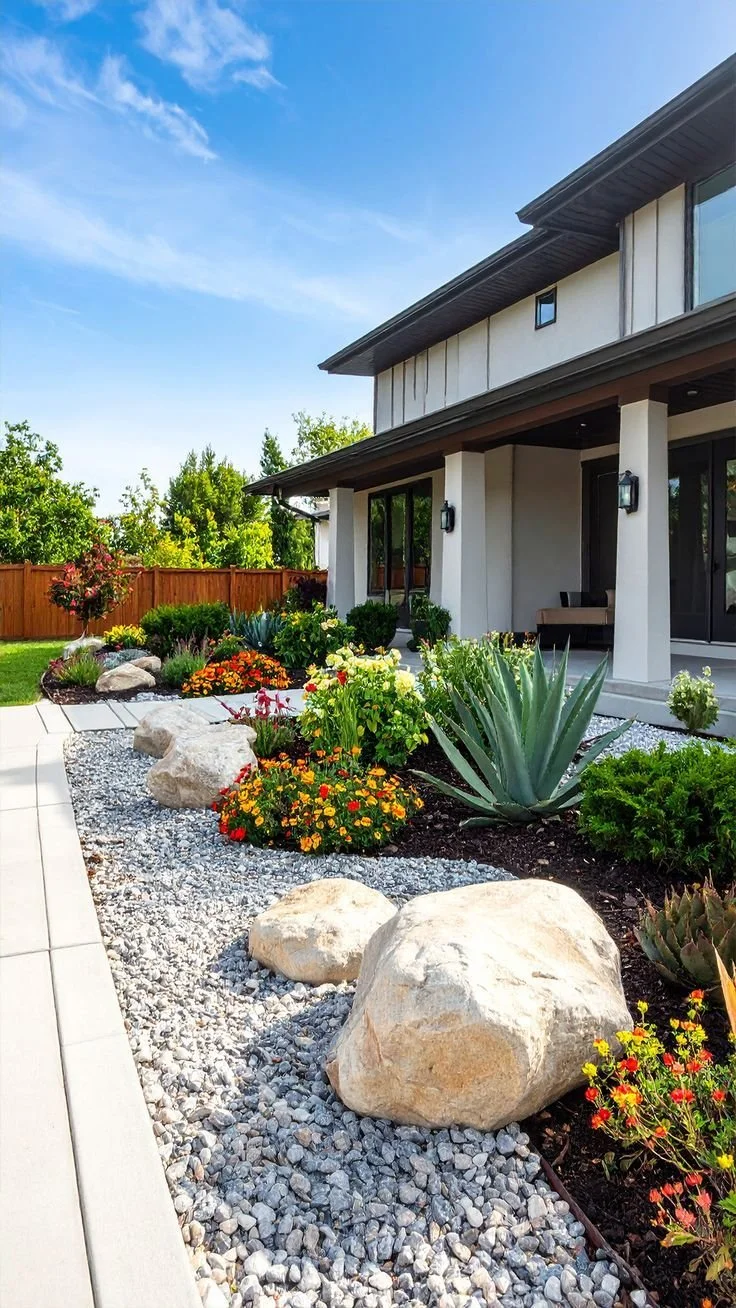
Photo Via: The Wood Meter
Use California Native Plants for Structure and Seasonal Interest
Native plants perform best under local conditions because they are adapted to heat cycles and limited water. California lilac (Ceanothus), white sage, Cleveland sage, manzanita, and toyon provide structure without heavy maintenance. Place taller species like toyon at the back of planting beds, with sage varieties in mid-layer groupings. This creates depth instead of flat planting strips. These selections align with California luxury home design trends, where sustainability and structure are equally important.
Add Mediterranean Plants That Handle Heat Well
Mediterranean species bridge beauty and durability in Los Angeles gardens. Olive trees, lavender, rosemary, and westringia hold shape through long dry periods and intense sun exposure. Olive trees should be spaced at least 12 to 15 feet apart to avoid overcrowding. Lavender and rosemary work best in clustered groups of 3 to 5 plants rather than scattered placement. These plants connect naturally with indoor-outdoor luxury living design, especially near patios and dining areas.
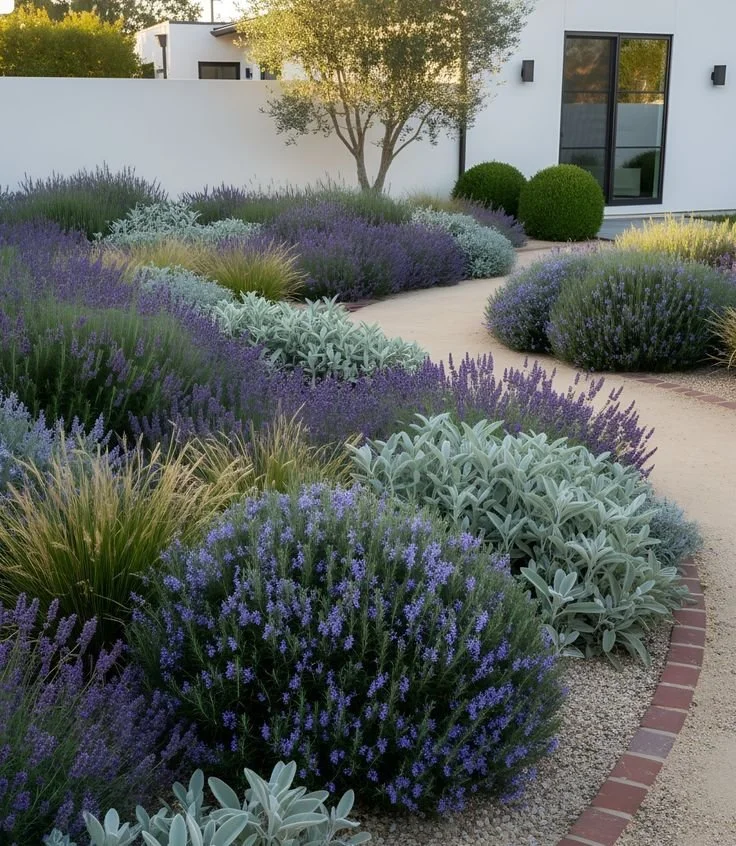
Choose Succulents and Agaves for Sculptural Form
Agave, aloe, and yucca introduce strong visual structure without irrigation demands. Place them in areas with full sun exposure where other plants struggle. Keep spacing deliberate. Agave should have at least 3 to 5 feet of clearance to allow full growth without crowding. These plants work best as focal anchors rather than mass planting.
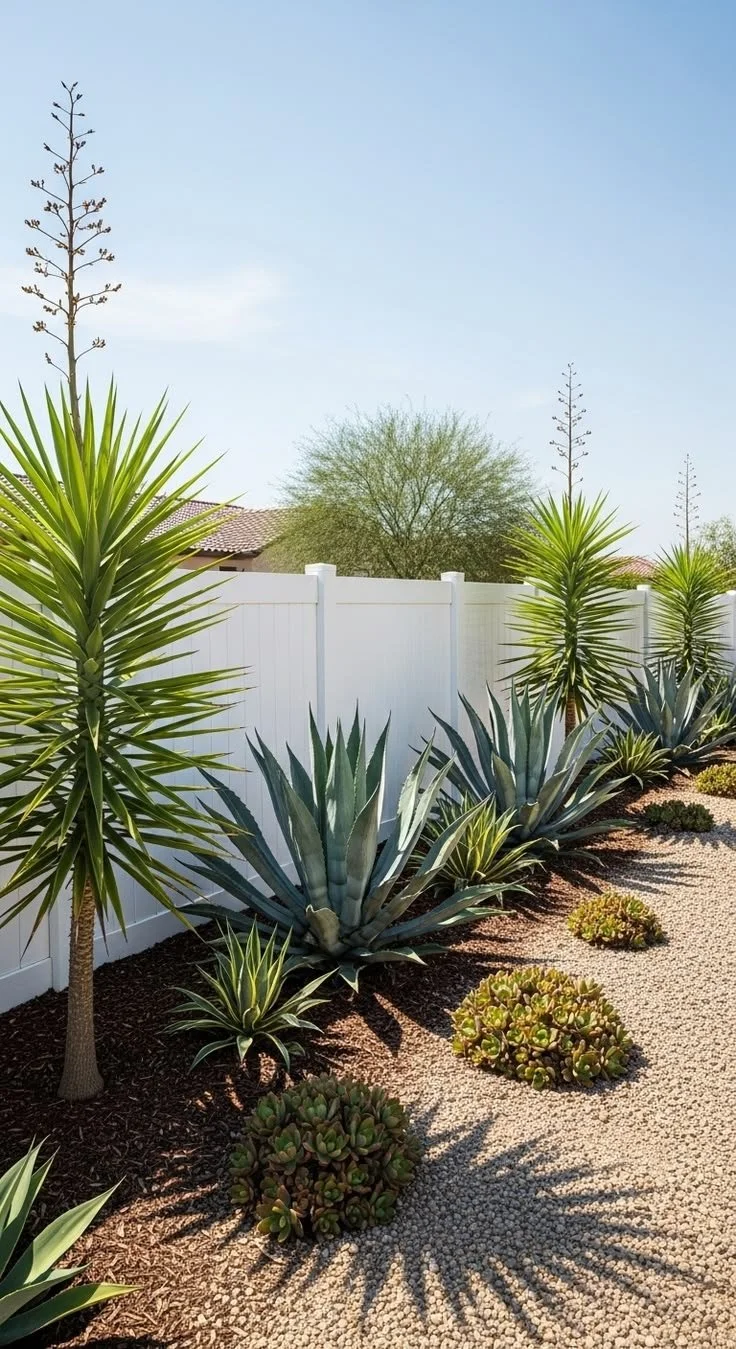
Photo Via: Mr Planter
Use Ornamental Grasses for Texture and Movement
Deer grass, blue fescue, and other ornamental grasses soften harder architectural edges. Group grasses in clusters of 5 to 7 plants to avoid scattered appearance. Place them along pathways or between structural plant groupings to create rhythm across the garden. This approach supports planting systems seen in luxury residential interiors Los Angeles, where repetition and balance define composition.
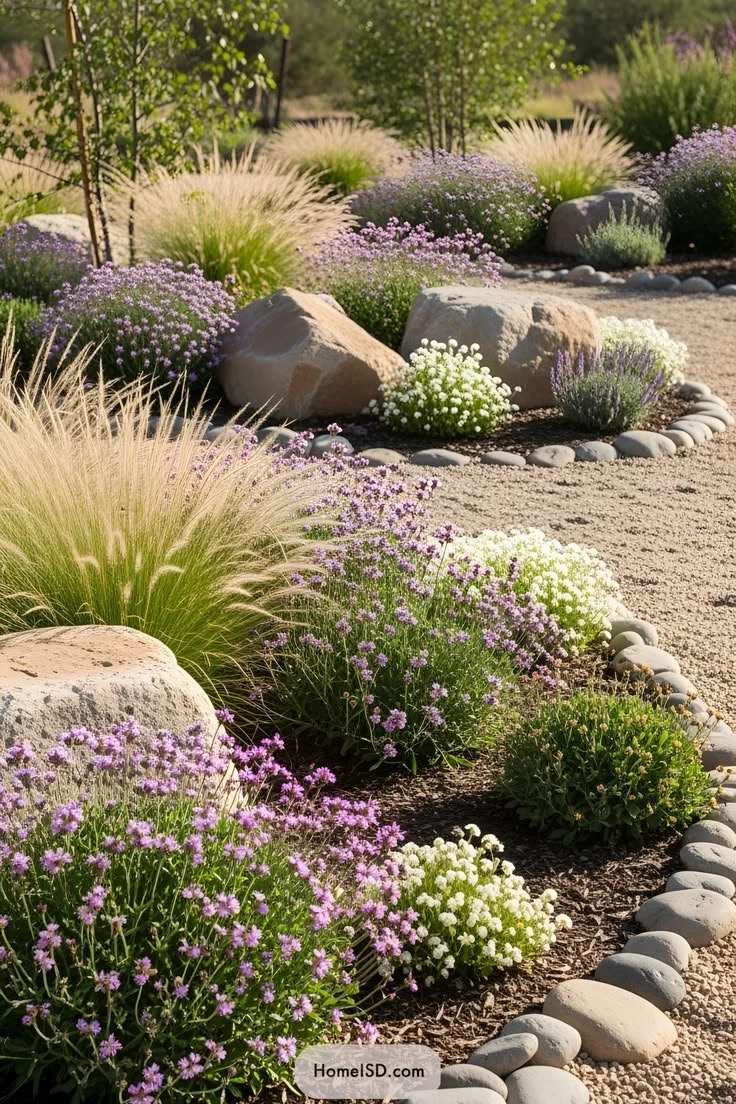
Photo Via: Home Isd
Layer Plants by Height, Water Needs, and Sun Exposure
A successful low-water garden depends on hierarchy. Place tallest plants at the back, mid-height shrubs in the center, and low groundcovers or succulents at the front. Avoid mixing high- and low-water plants in the same irrigation zone. Grouping by water demand reduces maintenance and prevents uneven plant performance. This structure also improves long-term durability when paired with the best materials for luxury homes in California climate, such as gravel, decomposed granite, and light stone finishes.
The best low-water plant ideas for Los Angeles gardens are not just about choosing hardy plants. They are about placing those plants with structure, spacing, and long-term growth in mind. California natives, Mediterranean species, succulents, agaves, and ornamental grasses can create a garden that feels full, organized, and suited to the climate without requiring constant irrigation or upkeep.