
How to Design a Pool Area for Los Angeles Homes
A well-designed pool in Los Angeles is not just a water feature. It is part of how the home is used. Heat, sun exposure, hillside grading, and entertaining needs all shape how the space performs. The strongest designs align with California luxury home design trends and connect naturally to architecture, not just landscaping.
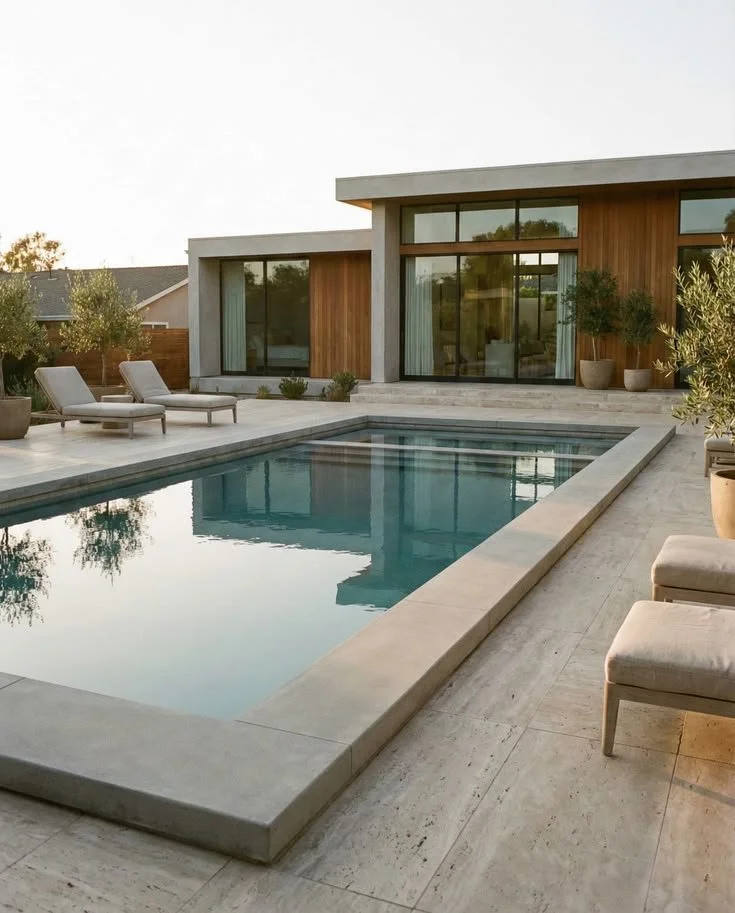
Photo Via: Nest Lumen
Choose a Pool Shape That Matches the Architecture
Pool shape should follow the home’s structure. Rectilinear pools work best with modern homes because they align with clean building lines and patio geometry. Mediterranean or transitional homes can support softer curves or freeform edges.
On hillside properties, narrow lap-style pools often work better than wide shapes due to grading limits. The goal is consistency with indoor-outdoor luxury living design, where exterior and interior spaces feel connected through proportion and layout.
Use Materials That Perform Well in Southern California
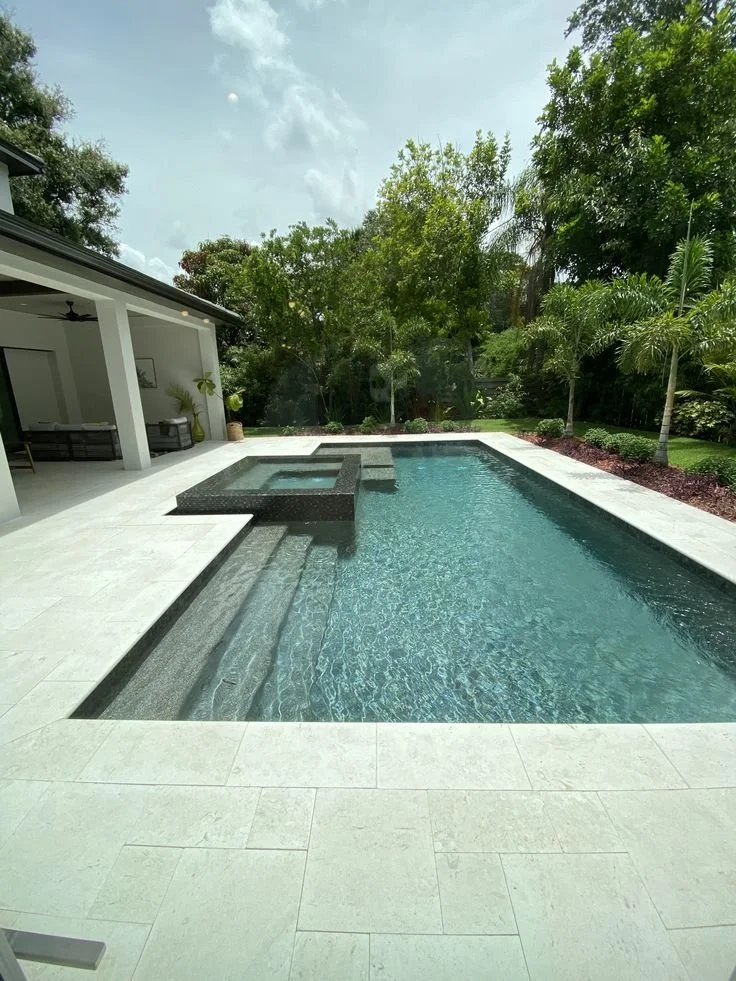
Material choice determines both comfort and maintenance. Light-colored stone or porcelain coping reduces heat absorption in full sun. Concrete pool decks should be sealed to resist staining and fading. Avoid dark stone in direct sunlight because it becomes uncomfortable underfoot. These decisions reflect the best materials for luxury homes in California climate, where durability and heat performance matter more than appearance alone.
Design for Lounging, Entertaining, and Daily Use
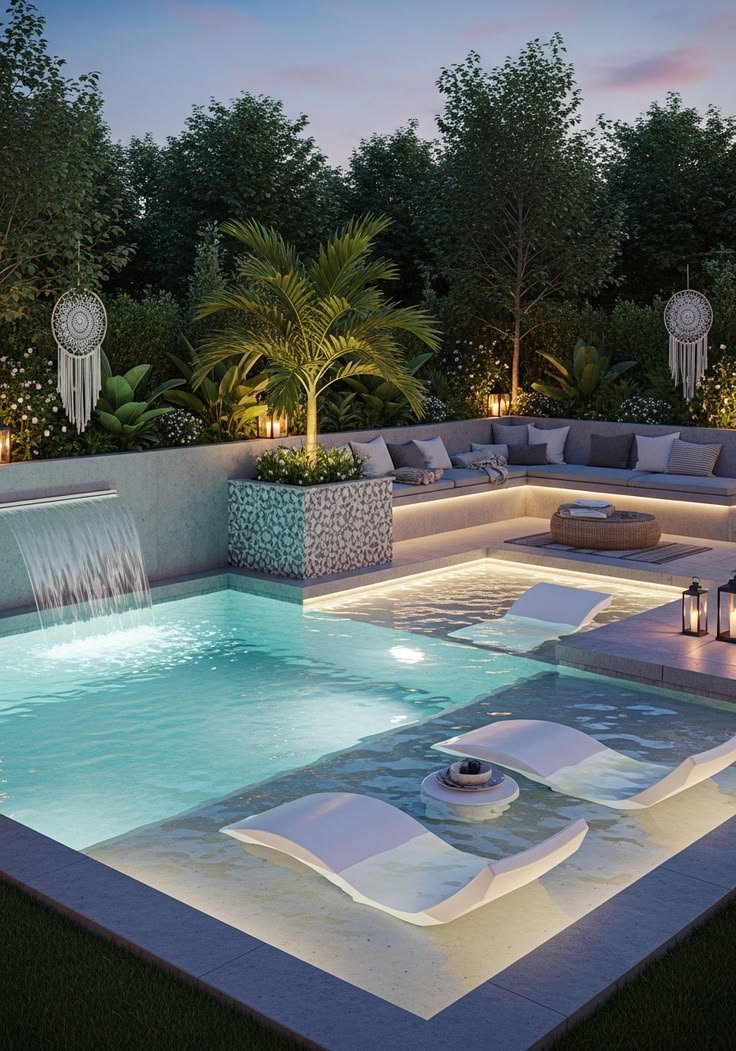
A pool should support more than swimming. Baja shelves, usually 6 to 12 inches of water depth, allow for lounging and children’s use. Integrated spas increase year-round usability. Seating should be placed close enough for conversation but not crowd circulation around the pool edge. Outdoor kitchens or bar seating should connect directly to the pool deck to support entertaining tied to luxury residential interiors Los Angeles, where indoor hosting extends outward.
Add Waterline Tile, Coping, and Decking With Care
Waterline tile should be simple and durable, such as glass, stone, or ceramic in neutral tones. Coping should be wide enough, at least 12 to 16 inches, to allow safe movement around the pool edge. Decking materials must be slip-resistant and heat-tolerant. Avoid mixing too many textures. Two primary materials are enough for most residential pools.
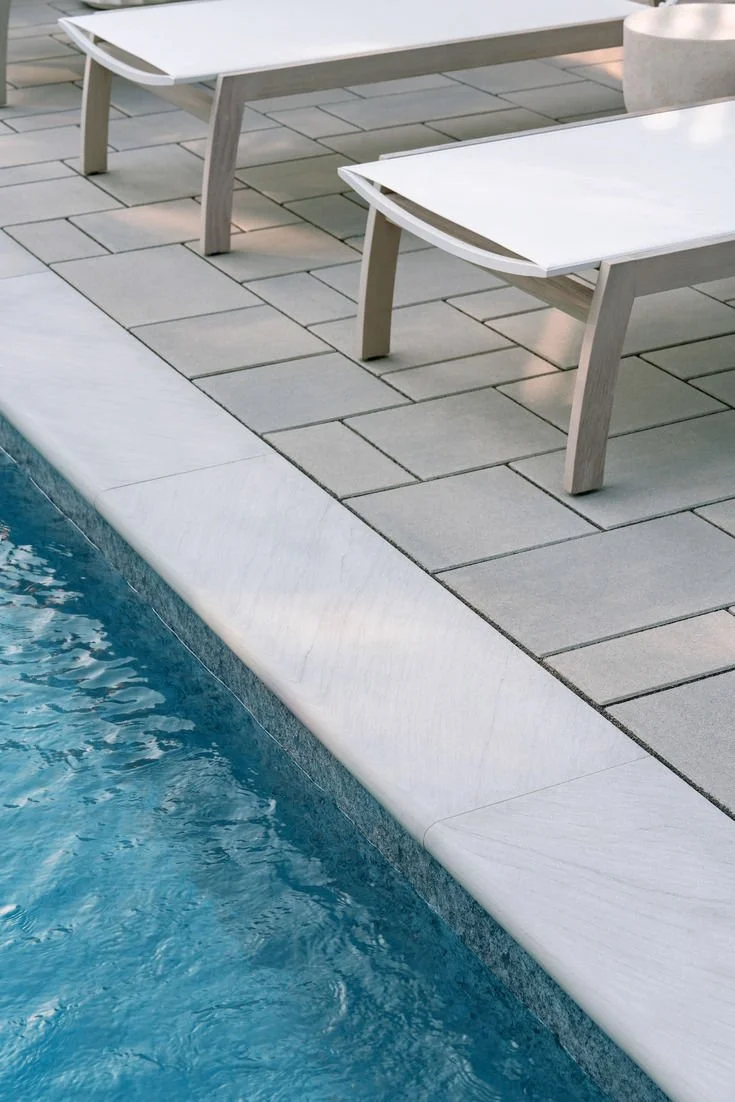
Photo Via: Techo Bloc
Make the Pool Area Part of the Full Outdoor Living Plan
The pool should not sit alone in the yard. It should connect to dining areas, shade structures, and planting zones. Sightlines from the home matter because large windows and doors should frame the pool, reinforcing indoor-outdoor luxury living design. This creates a direct relationship between interior living spaces and outdoor use.
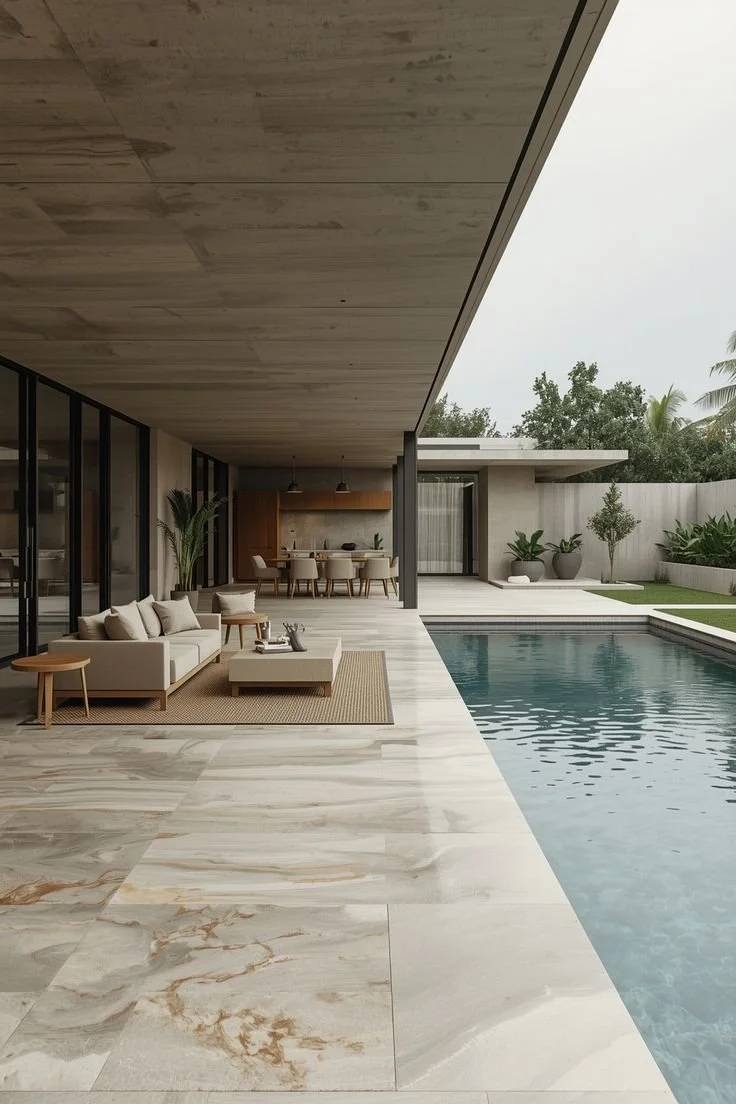
The best pool areas in Los Angeles are planned as part of the full outdoor living experience. Shape, materials, seating, shade, and sightlines all affect how the pool feels and functions day to day. When the pool connects clearly to the architecture and the home’s entertaining spaces, it becomes more than a feature. It becomes a usable extension of the home.