
When and Where to Go Retro With Your Kitchen Appliances
Retro appliances show up in a lot of kitchens, but they don’t always work everywhere. The key is knowing where they fit and where they don’t. In many modern luxury interior design Los Angeles homes, the approach is usually selective. A few pieces can add character, but the rest of the kitchen still needs to function like a modern space.
Start With One Focal Piece
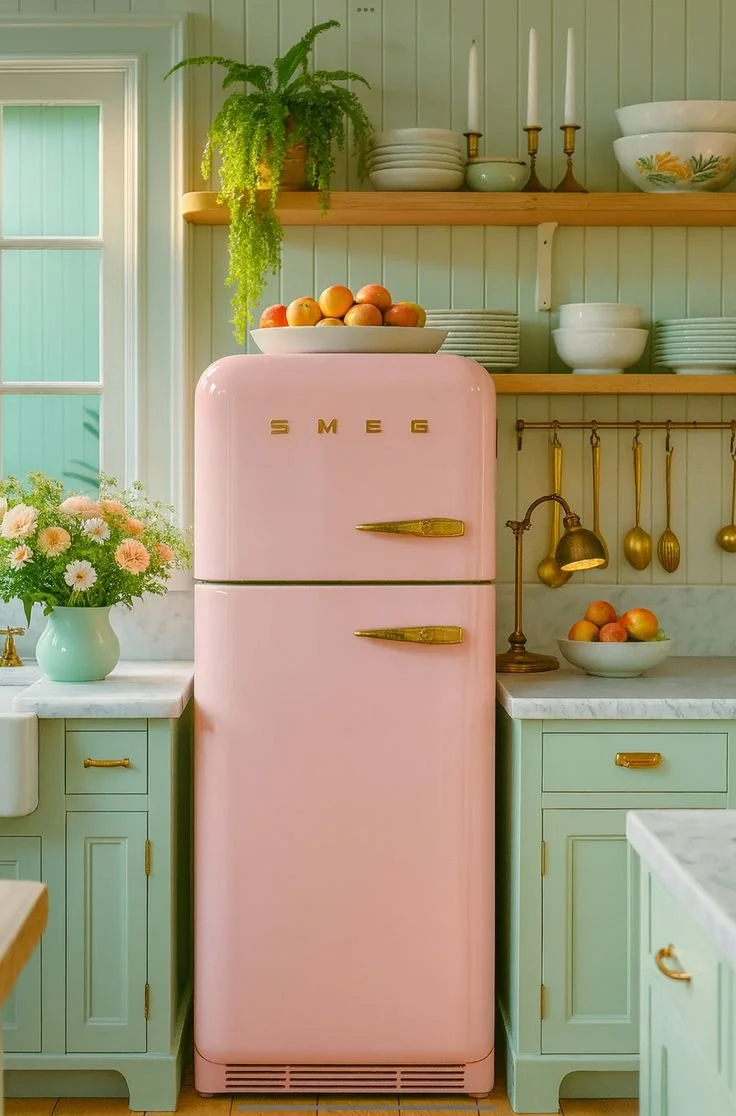
A retro fridge is usually the easiest place to start. It’s large enough to anchor the space, and the color or shape stands out without needing much else around it.
In kitchens where layout and flow matter, like those designed with luxury kitchen design Los Angeles in mind, keeping the retro element to one main piece avoids clutter. Everything else can stay streamlined, which helps the space feel balanced.
Place Retro Pieces Where the Background Stays Simple
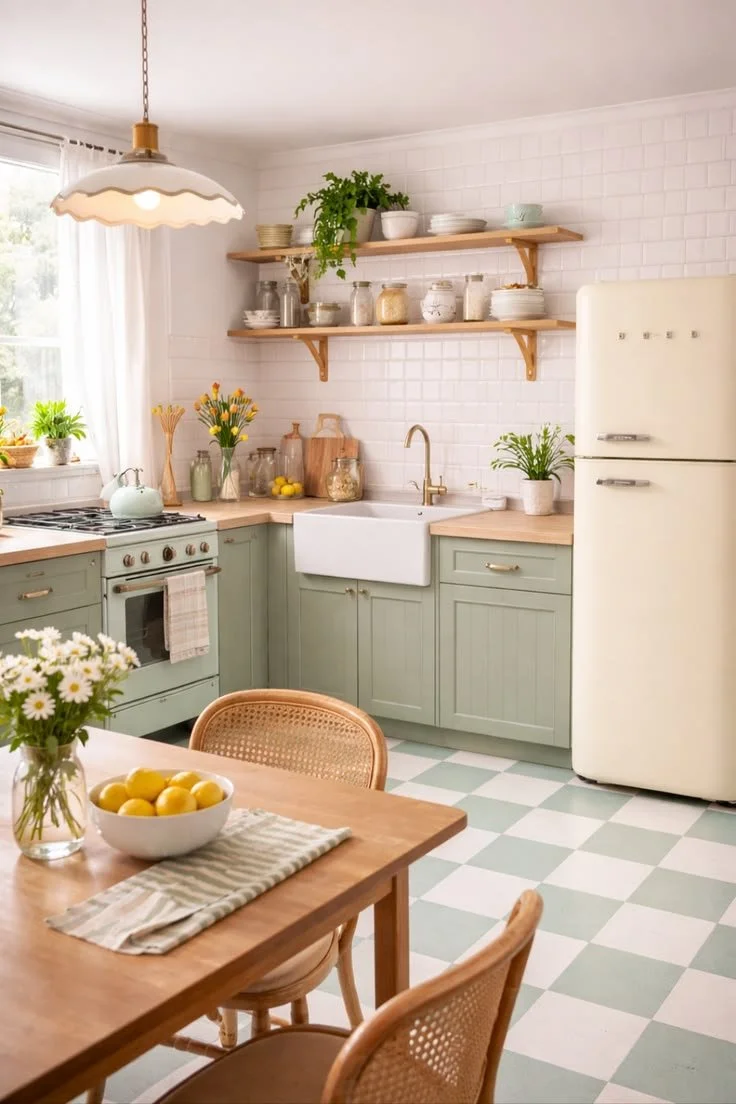
This simple setup keeps everything around the appliance quiet and consistent. The cabinetry stays in soft, muted tones, the backsplash is clean and uniform, and the open shelving is styled without too much variation. Nothing pulls attention away from the fridge.
That’s what makes the retro piece work here. It stands out, but not in a way that feels disconnected. The color ties back to the floor and cabinetry, so it still feels part of the space rather than something added later.
This approach is common in luxury kitchen design Los Angeles, where even statement pieces are supported by a controlled backdrop. The focus stays on one element, while the rest of the kitchen keeps things steady and easy to read.
Use Retro in Secondary Spaces
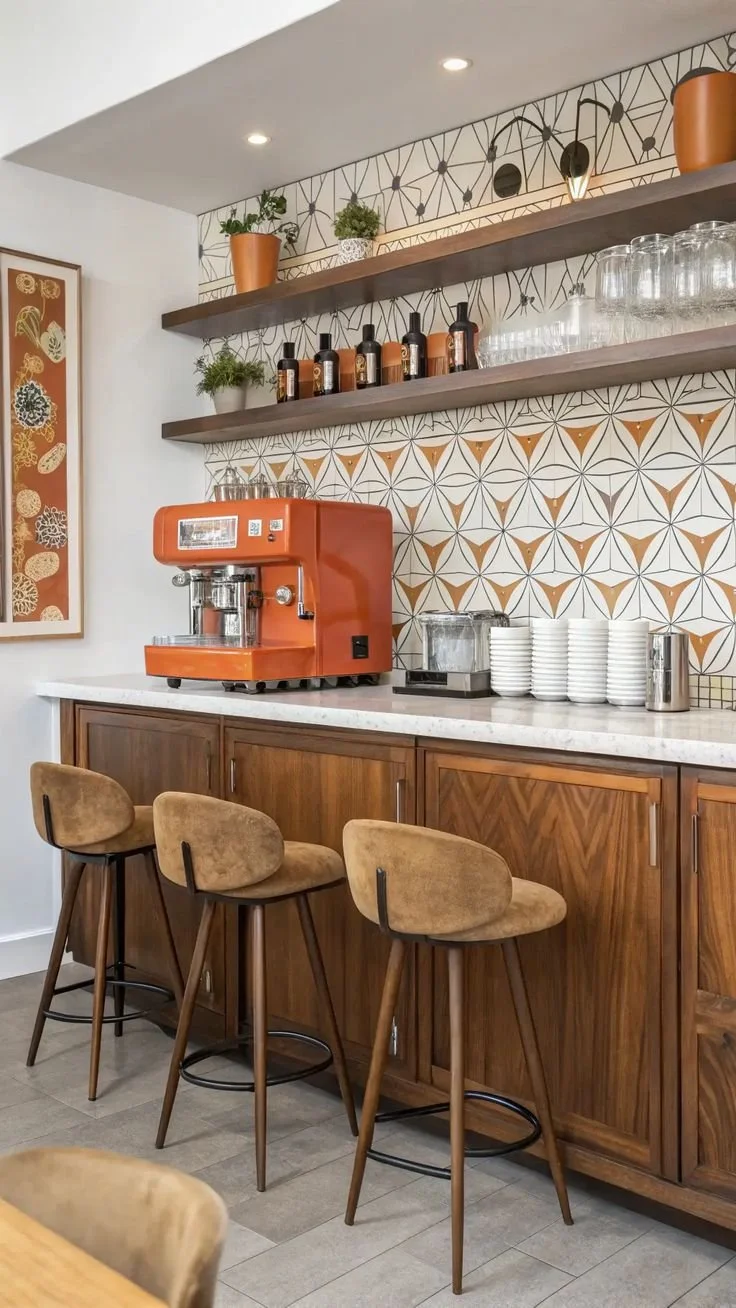
Photo Via: My Elegant Home
Not every retro piece needs to sit in the main kitchen. This kind of setup works better in a dedicated zone, like a coffee bar or a built-in counter along one wall. It keeps the look contained without affecting the rest of the space.
Here, the retro espresso machine stands out, but it’s framed by materials that already lean warm and slightly vintage. The wood cabinetry, patterned tile, and open shelving all support it, so it doesn’t feel out of place.
This is often how retro elements are handled in custom home interiors Los Angeles. Secondary areas give more flexibility, so there’s room to bring in color or character without needing to carry it across the entire kitchen.
Choose Placement Based on Finish and Scale
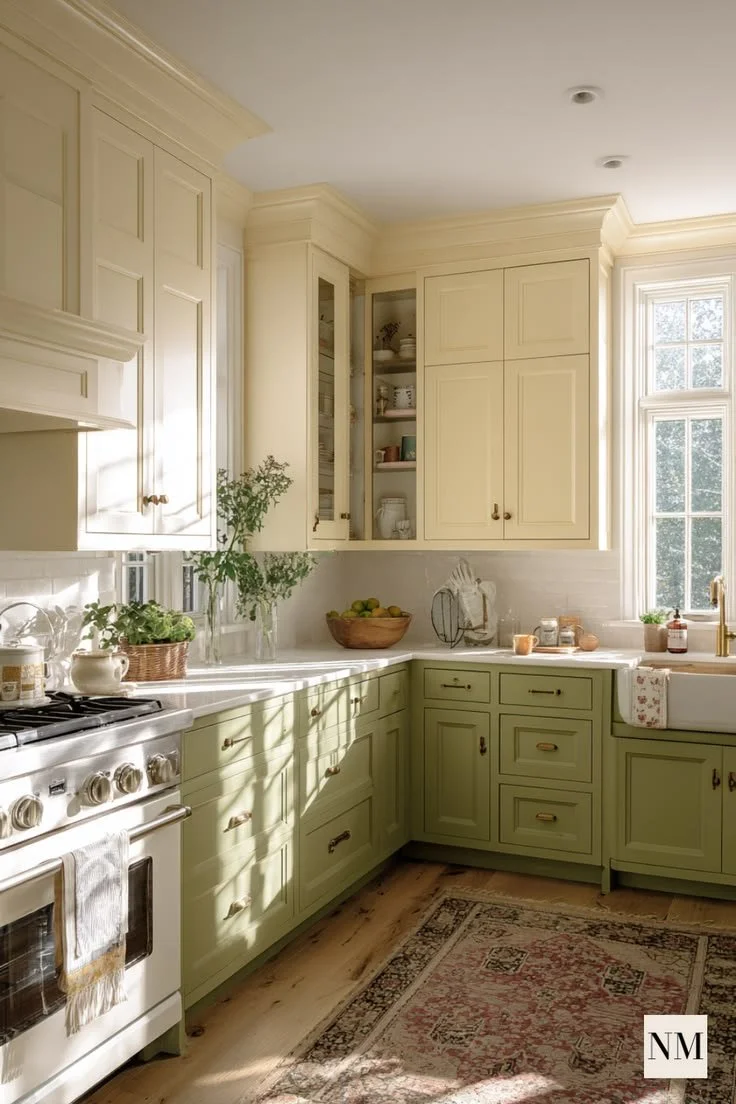
Retro doesn’t always mean bright colors. There are versions in muted tones, matte finishes, or even stainless steel with vintage detailing. Matching the finish to the rest of the kitchen helps everything feel intentional.
In this setup, everything stays within a soft range. The cabinetry, countertops, and fixtures all lean warm and slightly toned down, which makes it easier for a retro piece to sit naturally in the space rather than stand apart.
Scale matters just as much. In a kitchen like this, where the layout feels more compact and traditional, a large statement appliance can feel out of proportion. Smaller retro pieces, or ones that follow the same color direction, tend to work better without disrupting the overall flow.