
How to Design a Backyard Around a Hot Tub
A hot tub can be one of the most used features in a Los Angeles backyard, but only when it is placed and supported correctly. The most common planning mistakes are not about the tub itself, but about what surrounds it. Poor access from the house, slippery walking paths, lack of privacy, or no space for towels and cover removal can quickly turn a good installation into something inconvenient.
In many Los Angeles luxury home design trends, hot tubs are no longer treated as standalone features. They are designed as part of daily routines, connected to bathrooms, bedrooms, pool areas, and outdoor seating so they can be used comfortably at different times of day.
The goal is simple: make it easy to use, safe under wet conditions, and connected to the way the backyard actually functions.
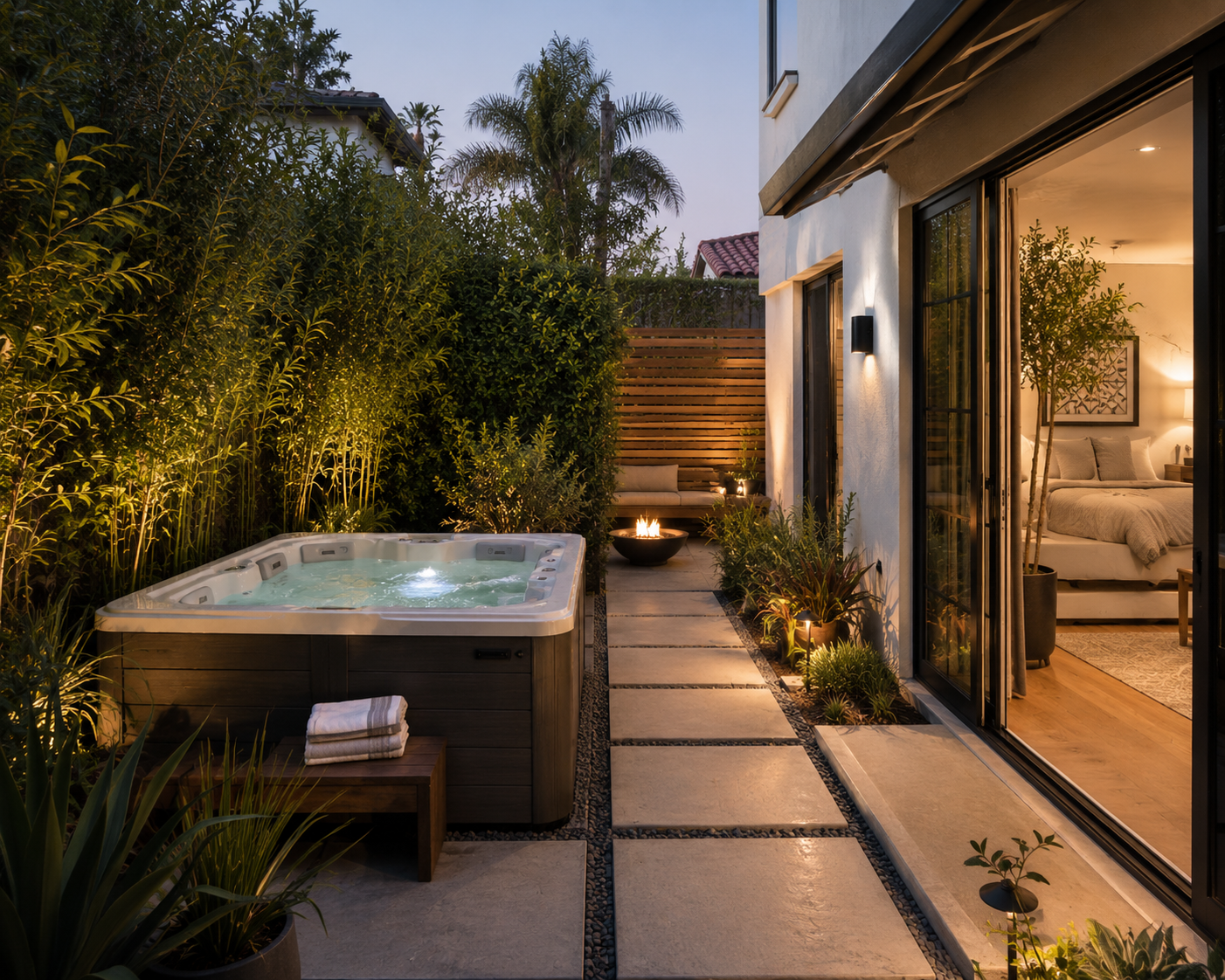
Hot Tub Backyard Design Ideas That Actually Work
Place the Hot Tub Close Enough to Use Often
Distance matters more than most homeowners expect. A hot tub placed far from the house often gets used less, especially at night or during cooler months when walking across the yard feels inconvenient.
The most practical locations are near a primary bedroom terrace, just off the main patio, or adjacent to a pool zone where plumbing and drainage already exist. This type of planning aligns with broader indoor-outdoor luxury living design, where outdoor spaces support daily routines instead of occasional use.
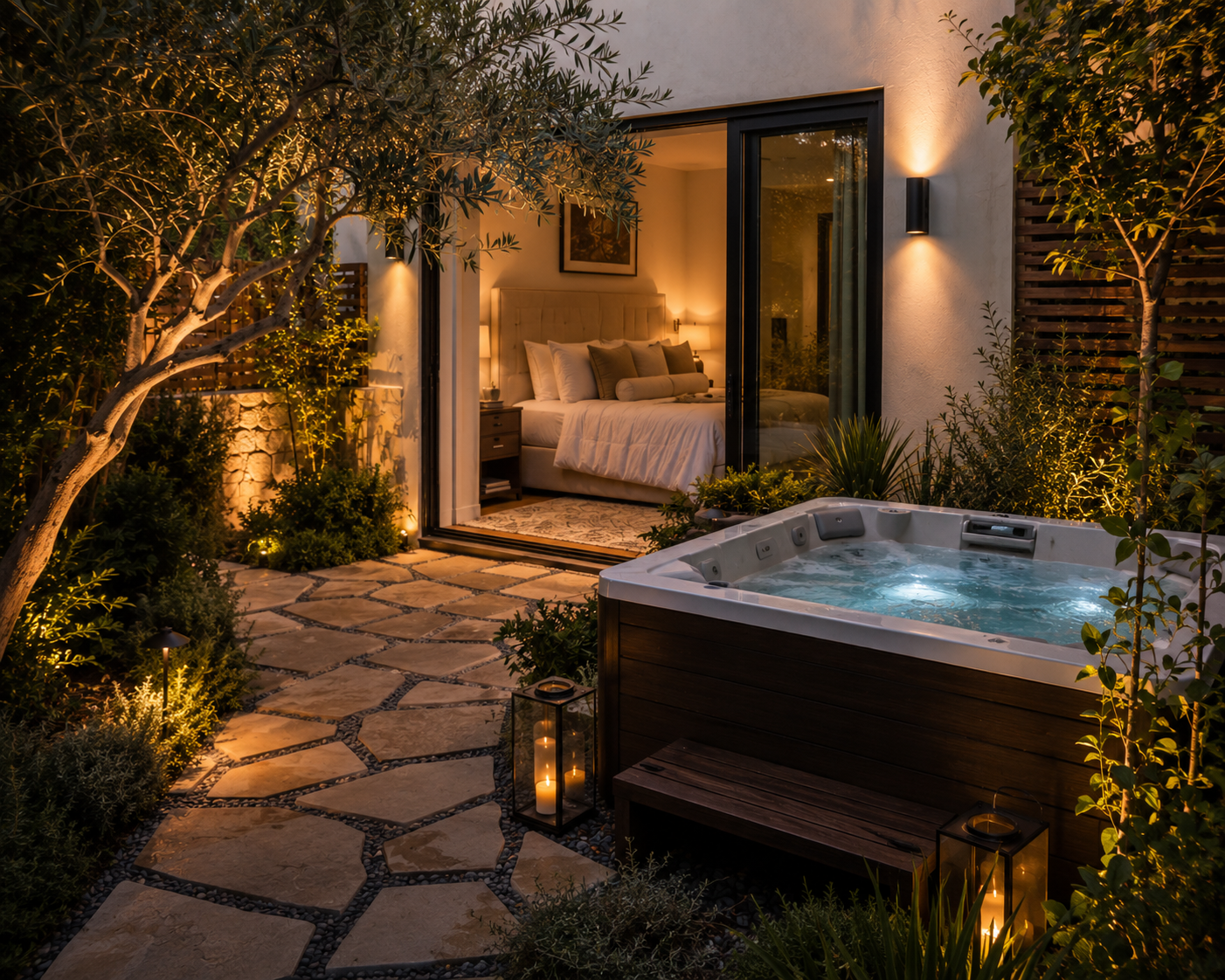
Give the Area Privacy Without Closing It Off
Privacy is essential, but full enclosure can make the space feel disconnected from the rest of the backyard. The best setups use layered screening instead of solid walls.
Options include slatted wood screens, tall planting, low garden walls, and subtle grade changes. These elements reduce visibility from neighboring properties while still keeping the hot tub visually connected to the garden and home architecture.
Many California luxury home design trends now favor this layered approach instead of heavy fencing or enclosed spa rooms.
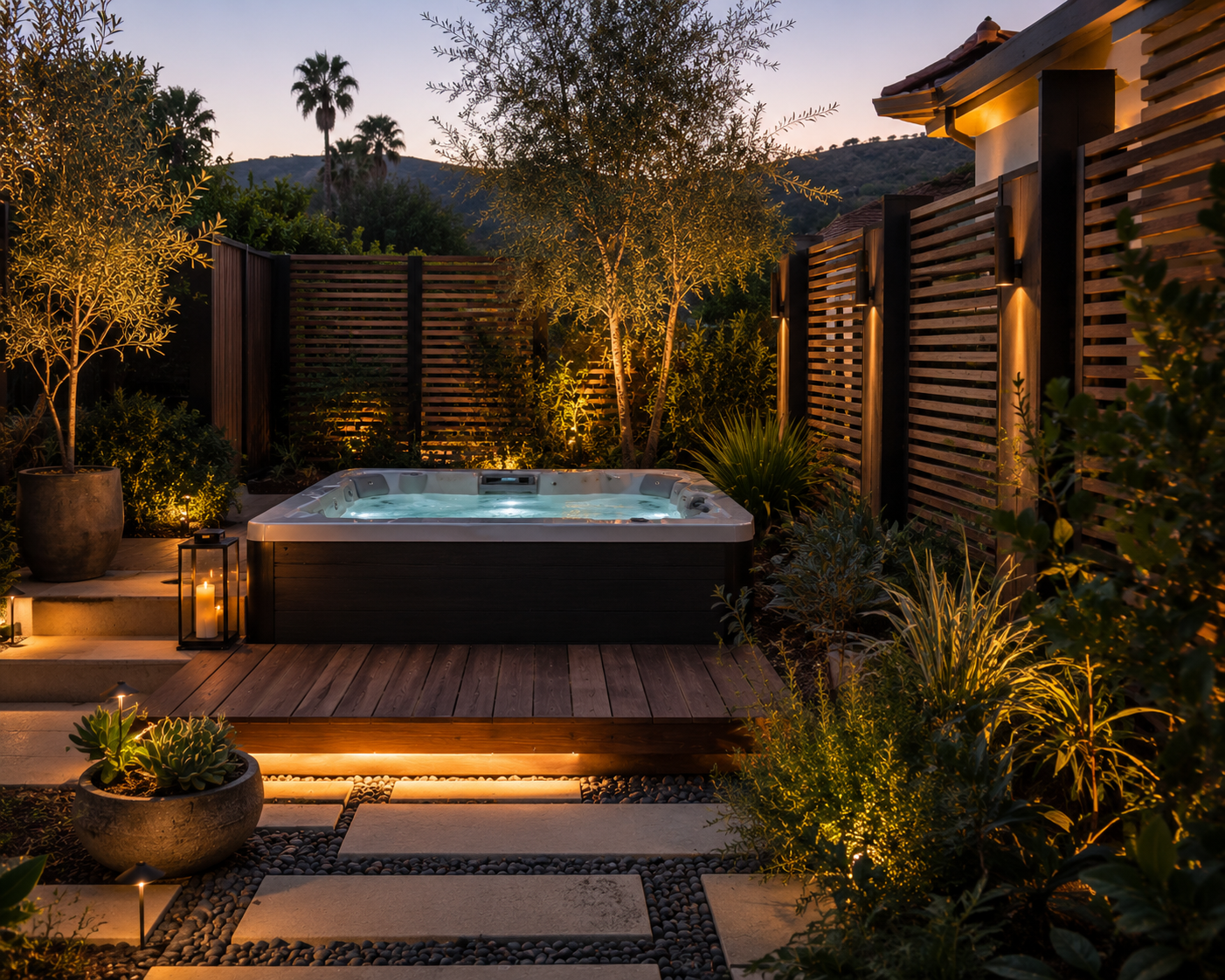
Plan the Surface for Wet Feet and Drainage
The surface around a hot tub must handle constant water exposure. Slippery paths or poor drainage quickly become safety issues. Materials like textured stone, porcelain pavers, or properly sealed concrete tend to perform better than smooth finishes.
Choosing the best materials for luxury homes in California climate also means considering heat, sun exposure, and long-term water contact. Drainage should direct water away from walking paths instead of pooling around entry steps.
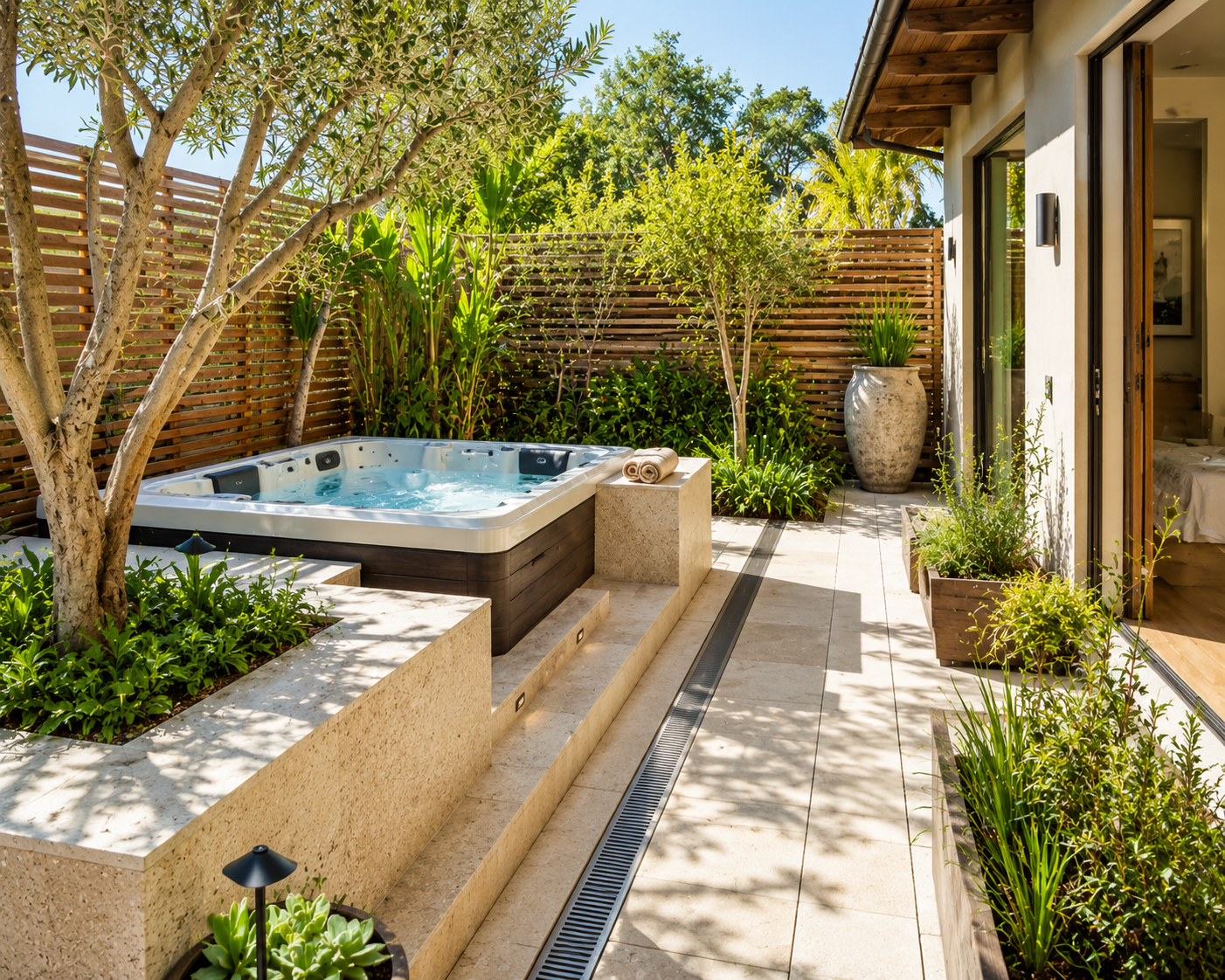
Leave Space for Access and Everyday Use
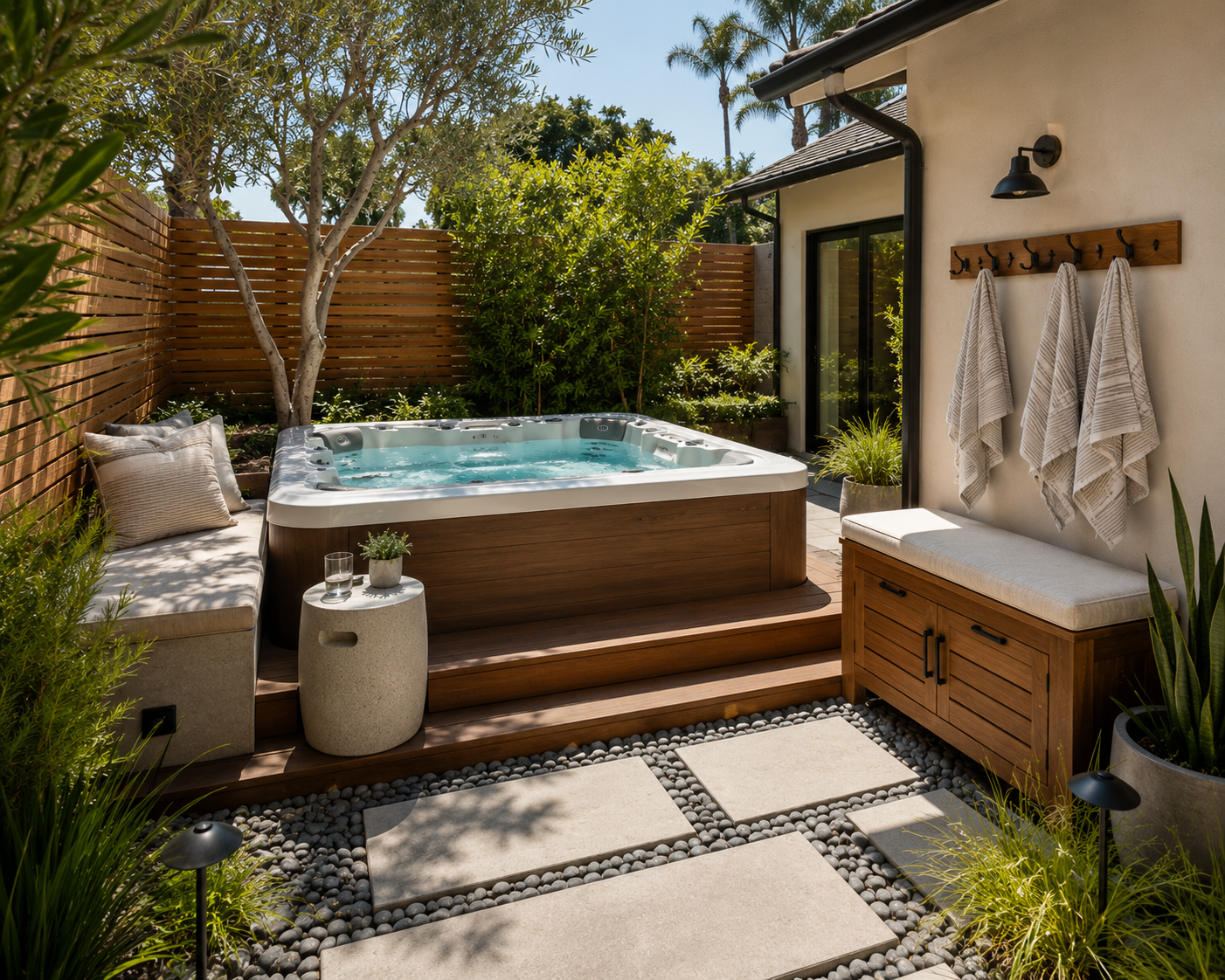
A functional hot tub area needs more than just the tub. Space is required for cover removal, steps, towel hooks, robe storage, and a small side table for drinks or personal items.
If these details are missing, the space becomes inconvenient to use even if it looks complete. Many custom home interiors Los Angeles projects now plan these utility points early so the hot tub area works in daily routines rather than requiring adjustments after installation.
Use Lighting and Views to Improve Evening Use
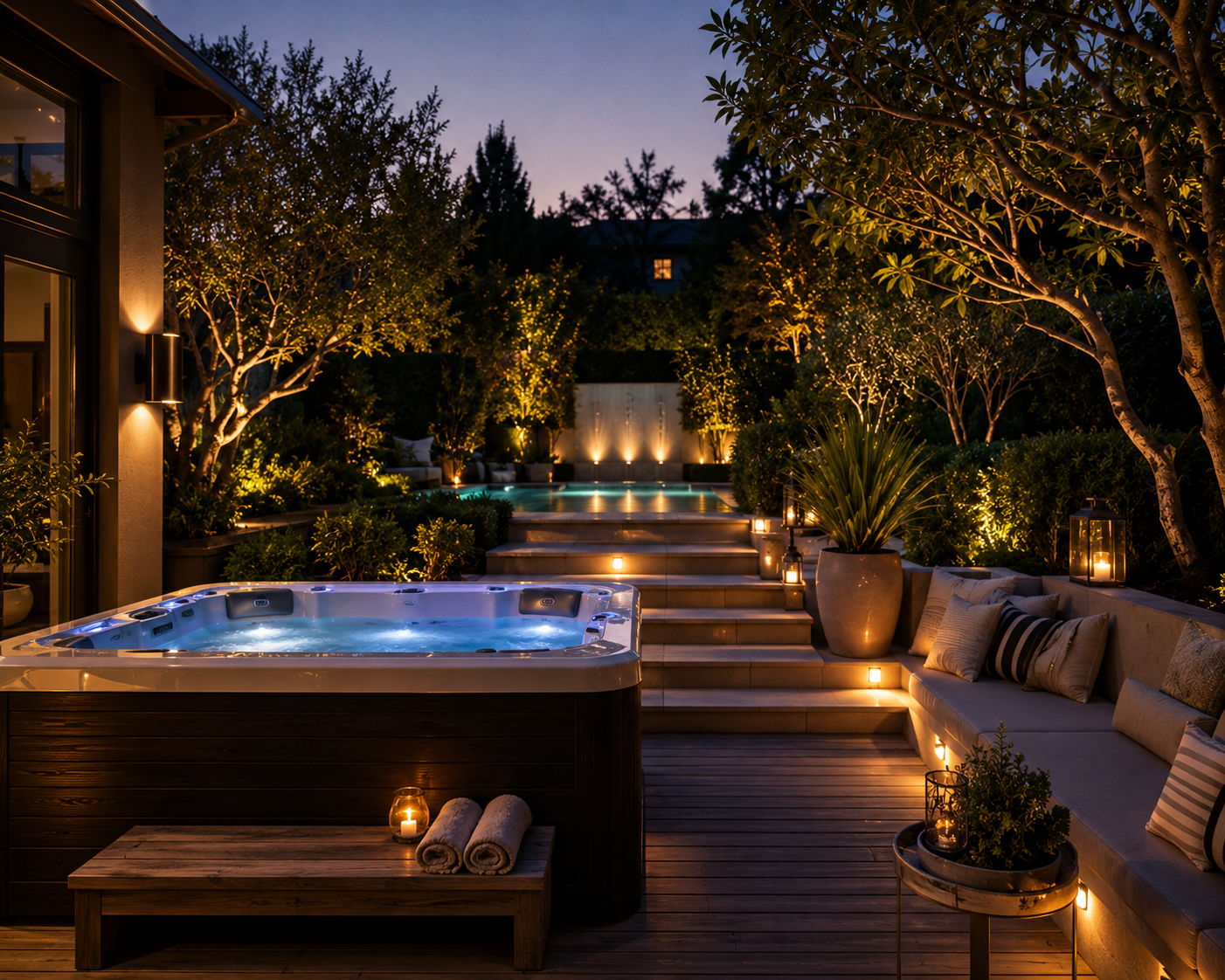
Hot tubs are often used at night, so lighting should support visibility without creating glare. Low path lights, recessed steps, and subtle wall lighting help define edges safely.
Views also matter. A well-placed hot tub should face a garden feature, pool, or architectural focal point instead of a blank fence. This approach is common in indoor-outdoor luxury living design, where outdoor spaces are planned as usable extensions of the home.
A well-designed hot tub area is not defined by the tub itself, but by how easily it can be used. In Los Angeles homes, the most successful layouts focus on access, privacy, drainage, and practical daily use rather than decoration.