
Engineered Wood vs Solid Hardwood: How to Choose What Actually Works
Flooring decisions usually come down to how a space is used day to day, not just how it looks at the start. Both engineered wood and solid hardwood can work well, but they behave differently once they’re installed, especially in places like Los Angeles where temperature and indoor-outdoor flow can affect materials more than expected.
What You’re Getting With Solid Hardwood
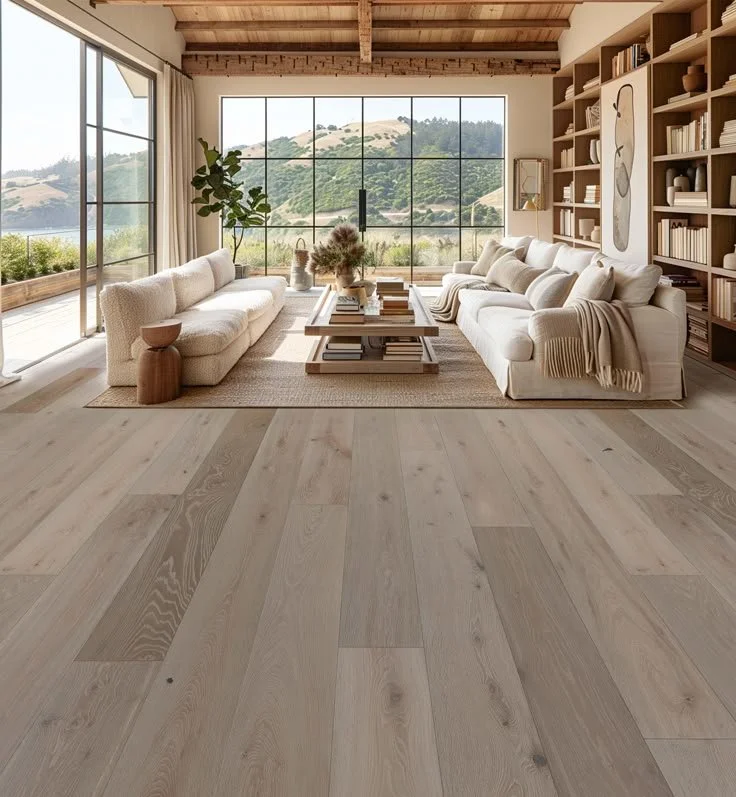
Solid hardwood is exactly what it sounds like, full pieces of wood cut into planks. It’s been around forever, and for good reason. It can be sanded and refinished multiple times, which makes it a long-term option if someone plans to stay in the home for years.
But it does move. Changes in humidity can cause expansion or slight gaps, especially in homes that open up to outdoor spaces. That’s something a lot of California contemporary interior design projects have to consider, since large sliding doors and airflow are pretty common.
How Engineered Wood Is Built
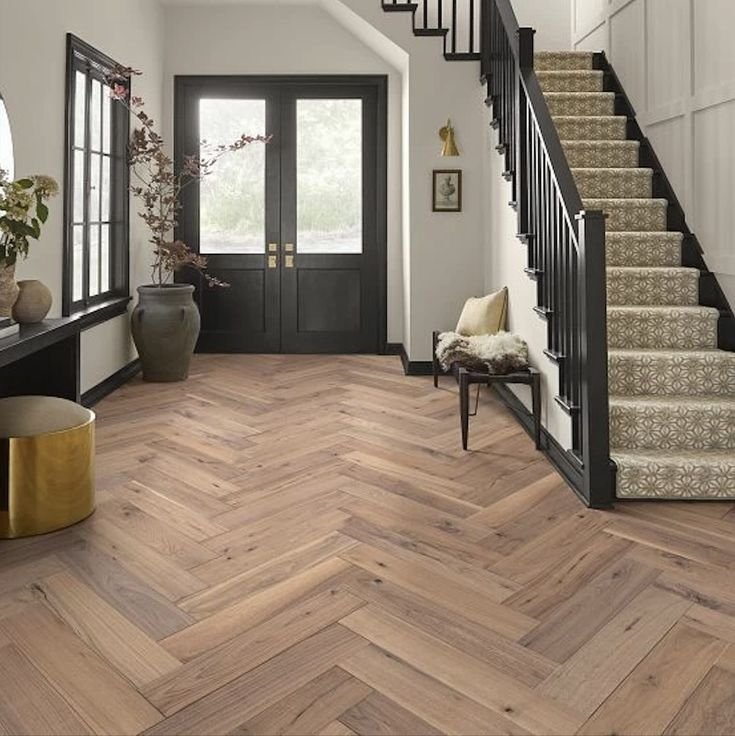
Photo Via: Tidbits & Twine
Engineered wood is built differently, but what matters most is how it performs once it’s installed. The layered construction helps keep the planks stable, which is why it’s often used for patterns like herringbone where movement would be more noticeable.
In spaces like this entryway, where there’s regular foot traffic and exposure from the outside, that added stability makes a difference. The floor stays more consistent over time, even with changes in temperature or airflow.
That’s one reason it shows up often in interior design for modern architecture Los Angeles, where layouts are more open and materials need to handle a bit more variation without shifting.
Where Each One Works Best
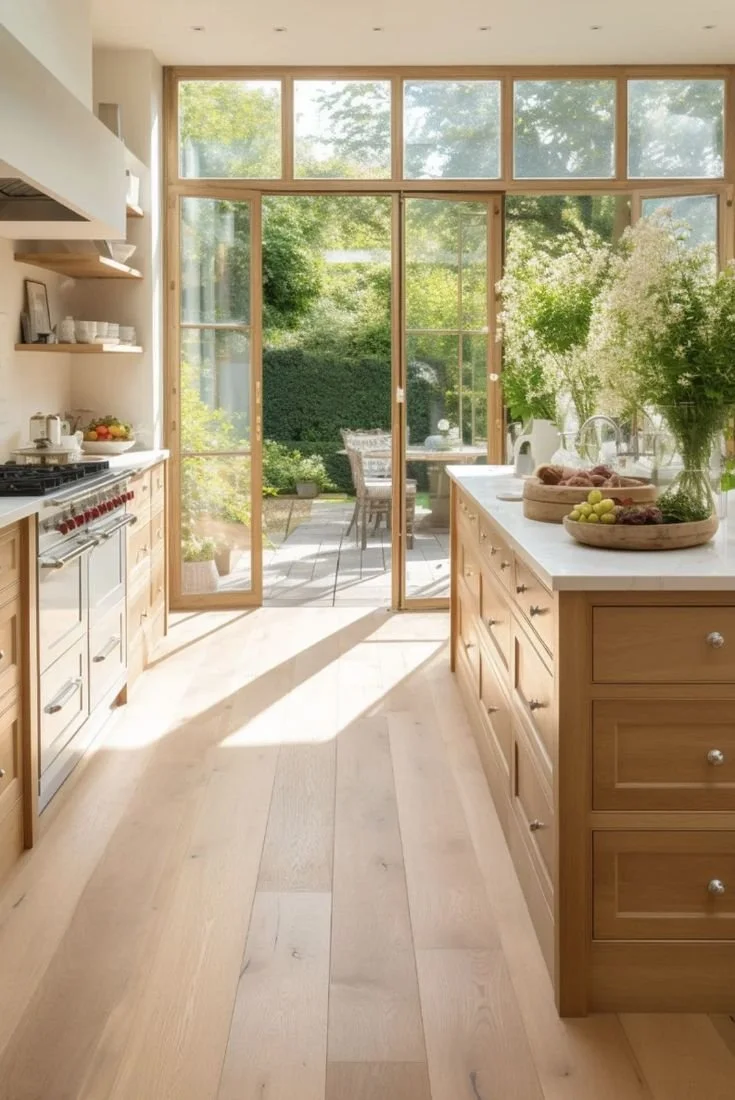
Photo Via: Dayhouse Studio
Where each option works best usually comes down to how exposed the space is. Areas like this, with large doors opening directly outside, deal with more temperature changes and daily movement.
In settings like this, engineered wood tends to be the safer choice. It handles shifts in humidity and airflow more consistently, especially in homes built around indoor-outdoor luxury living design, where the boundary between inside and outside is less defined.
Solid hardwood still works well in more controlled areas like bedrooms or formal living spaces, but in kitchens or spaces with direct outdoor access, stability becomes more important than tradition.
What to Look at Before Deciding
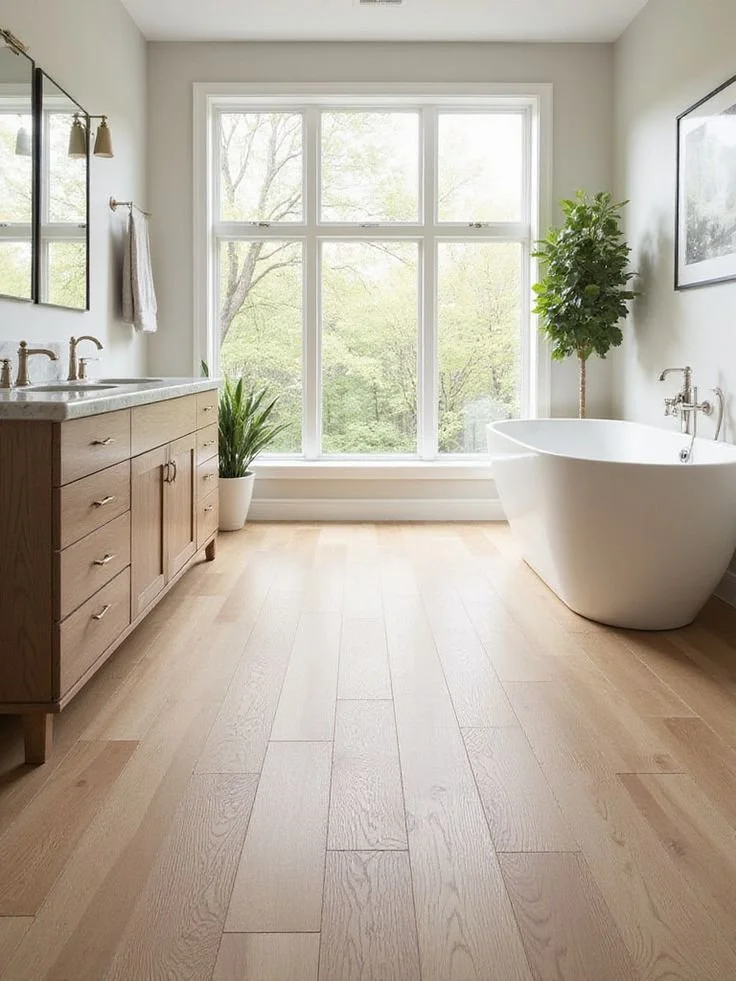
Photo Via: Decor Trick
The choice often comes down to how much flexibility the space needs. Areas like this, where there’s more moisture and daily use, require materials that can handle a bit more variation.
Engineered wood is usually the more practical option in bathrooms or similar spaces, since it stays more stable over time. Solid hardwood can still work, but it needs more control and maintenance to keep it looking consistent.
It’s also worth paying attention to finish. Lighter tones and matte finishes tend to show less wear, especially in spaces with natural light coming in throughout the day. That’s something often discussed during design consultation for high-end construction, where the focus shifts toward how materials will age, not just how they look at the start.