
Dining Room Decor Essentials
A dining room does not come together because you bought expensive pieces. It comes together when the key parts of the room are chosen well and work properly together. That is what dining room decor essentials are.
Your table needs to suit the size of the room. The light needs to sit properly above it. The rug needs to be large enough for the chairs. The wall decor needs to suit the scale of the space. And anything placed on the table should add to the room, not get in the way.
These choices matter in any home, but they matter even more in a luxury one. In custom home interiors Los Angeles, getting these basics right is often what separates a dining room that feels complete from one that feels awkward, sparse, or disconnected, even when every piece looks beautiful on its own.
This article breaks down the essentials that make the difference.
Choose a table that suits the room, not just the number of seats
Start with size before style. A dining table should feel substantial enough for the room but still allow comfortable movement around it. As a guide, aim to leave about 90–110 cm (36–42 inches) between the table edge and walls or nearby furniture. This keeps the room usable when chairs are pulled out.
Shape should follow the room. Rectangular tables work best in long or narrow spaces because they reinforce the layout. Round tables suit square rooms and help smaller dining areas feel easier to navigate. Oval tables soften stricter layouts while still offering enough length for hosting.
Base design also affects how the table functions. Pedestal bases allow more flexibility with seating and are often easier in tighter dining rooms. Four-leg tables tend to work better in larger spaces where movement is not restricted.
In California contemporary interior design, tables with clean lines and strong proportions tend to sit more comfortably within visually restrained rooms.
Position lighting so it supports the dining area
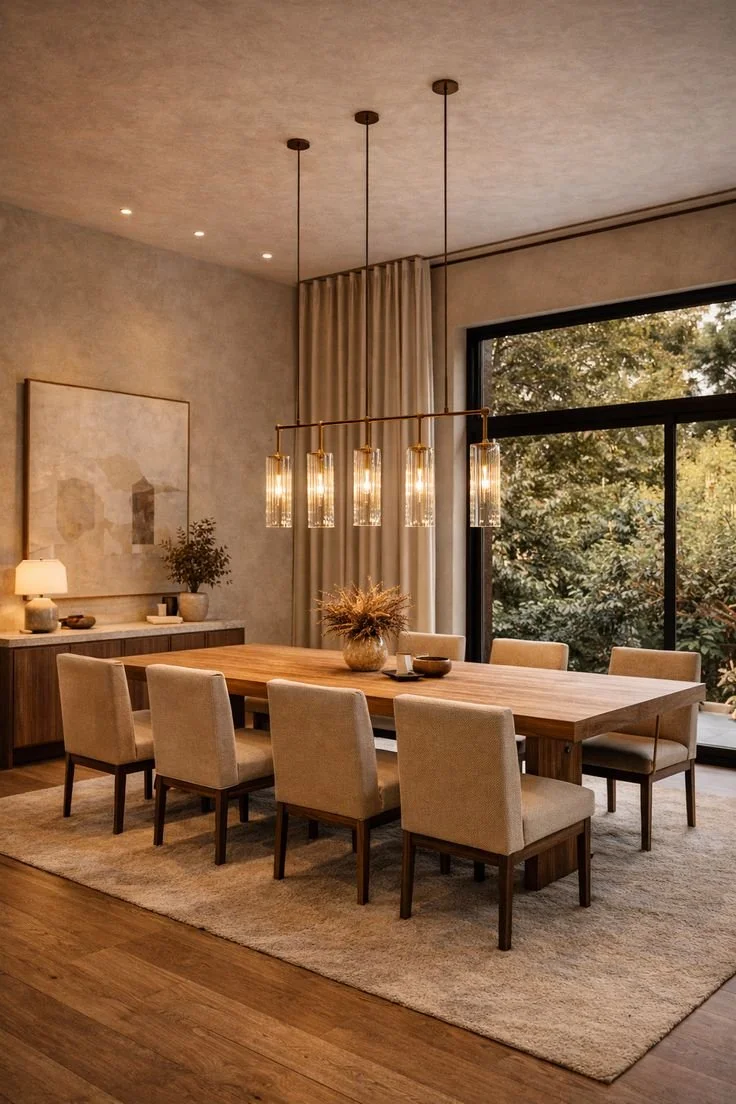
The light fixture should suit both the shape and size of the table. A long rectangular table usually works best with a linear chandelier or a pair of pendants. A round table is better with one central fixture. As a general guide, the fixture should be around one-half to two-thirds the width of the table so it feels connected rather than undersized.
Height matters too. Hang it low enough to visually define the dining area, but not so low that it blocks views across the table. In transitional luxury interior design, this balance is often what keeps the room feeling structured rather than scattered.
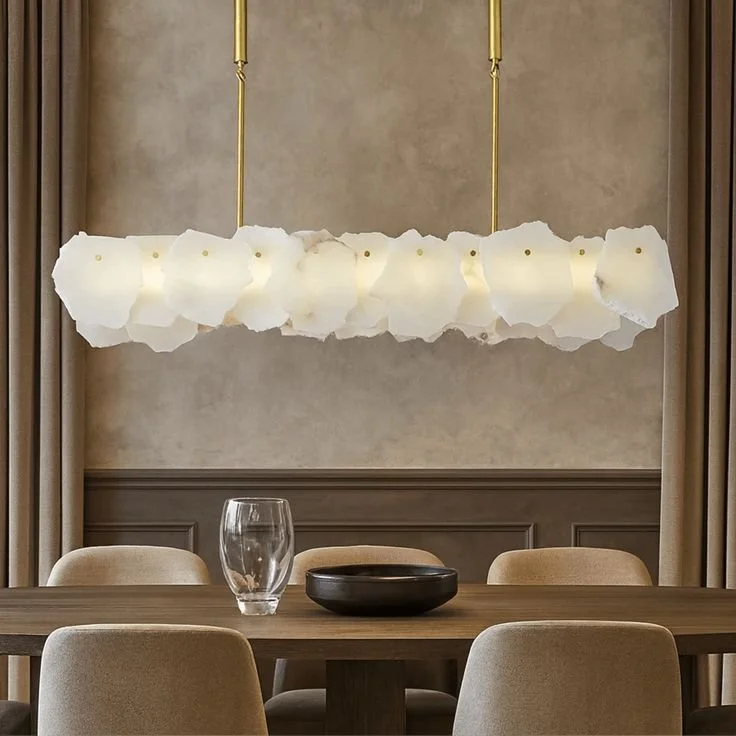
Photo Via: Morsale
Select a rug that works when chairs are in use
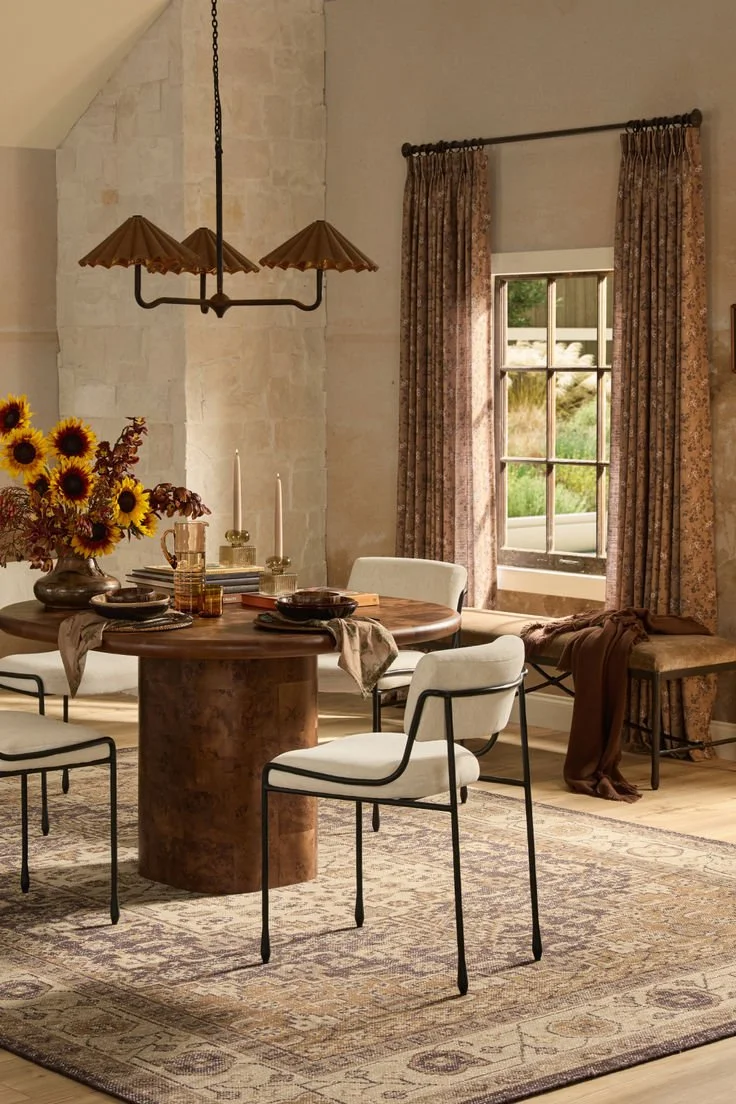
A dining rug should extend far enough beyond the table that chairs stay on the rug when pulled out. A useful guide is at least 60–75 cm (24–30 inches) past the table on every side. Anything smaller can make the dining area look undersized and make chairs catch at the edge.
Material matters as well. Low-pile or flatweave rugs are usually better for dining rooms because chairs move more easily on them. In European-inspired interiors LA, rugs often add richness through texture or subtle pattern, but the scale still needs to suit the room first.
Use wall decor with enough scale for the space
Wall decor should suit the furniture below it, not float above it looking too small. As a guide, artwork or a mirror should take up around two-thirds to three-quarters of the width of the table, sideboard, or wall section it relates to. One large piece often works well in a cleaner room, while a pair can suit a more balanced layout.
Mirrors are especially useful if the dining room needs more depth or bounces light poorly. In bespoke interior design Los Angeles, wall decor is usually chosen to complete the room, not just fill an empty wall.
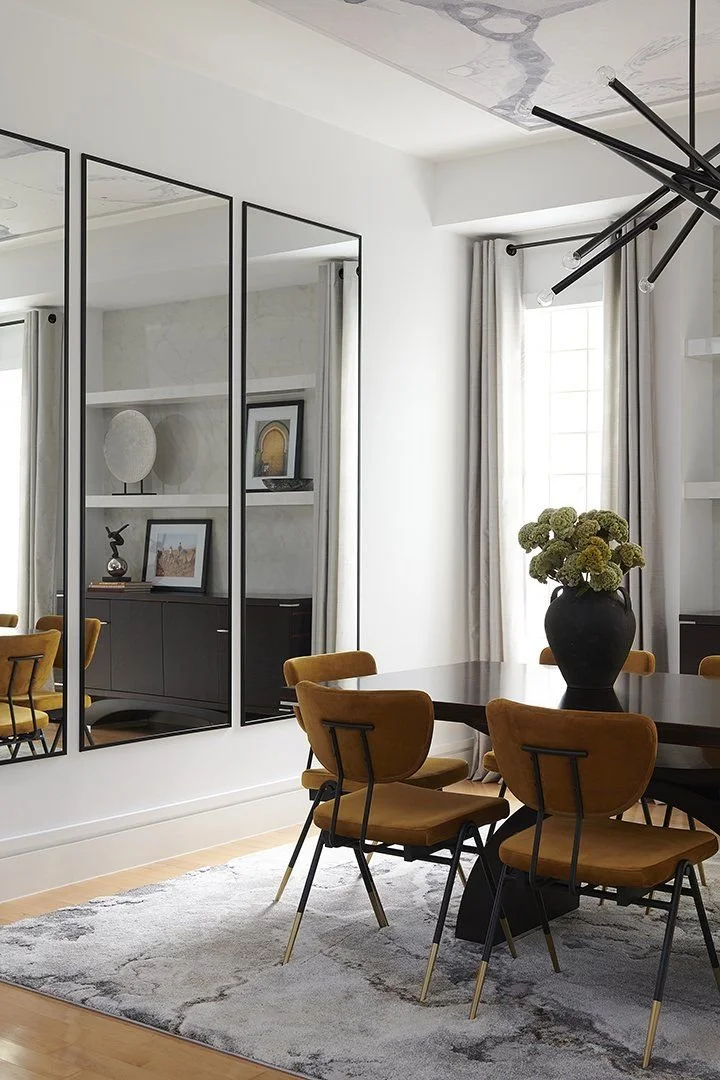
Photo Via: Avenue Design
Keep the table styling low and considered
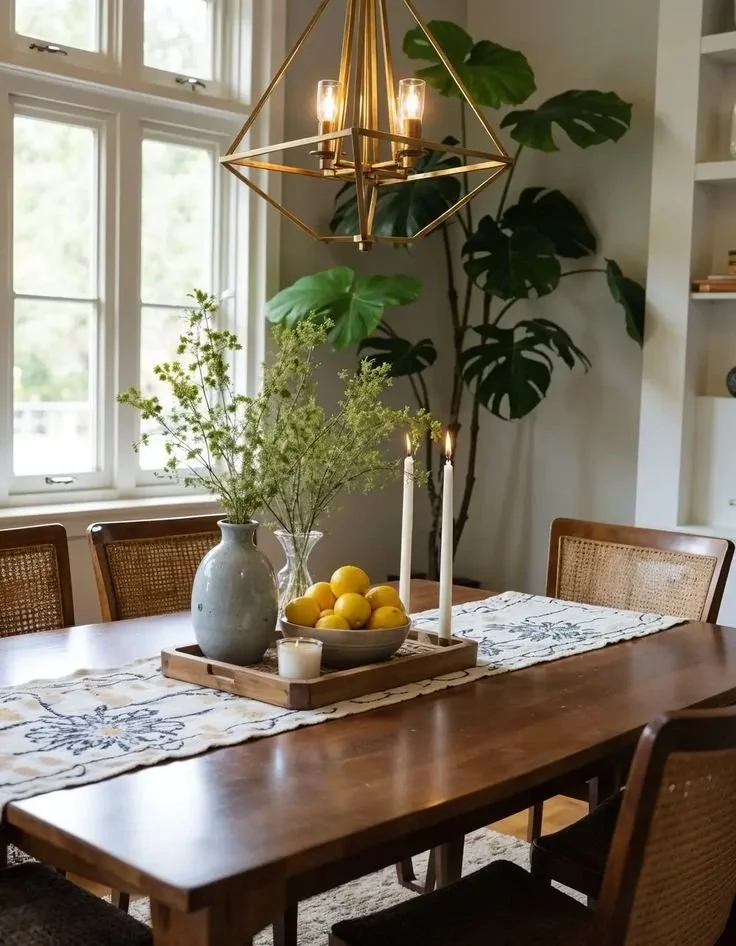
Photo Via: Okanly
A centerpiece should add something to the table without making it harder to use. Low bowls, sculptural vessels, or compact floral arrangements usually work better than anything tall or crowded. As a rough guide, keep most centerpieces below eye level when seated so conversation stays easy.
Think about material as much as shape. Ceramic, stone, glass, and metal can all add texture, but too many objects at once can make the table look busy. In custom home interiors Los Angeles, the strongest table styling usually adds detail without making the room feel overworked.