
Creative Stair Treatments to Level Up Your Home
Your staircase occupies a significant portion of your home's square footage and sight lines. So why do so many of them look like they were chosen from a catalog and never reconsidered? A staircase designed with the same care as the rest of the house changes how a home feels to move through, not just how it looks in photos.
Here's how designers and architects are treating stairs differently, and what options are worth knowing before you begin.
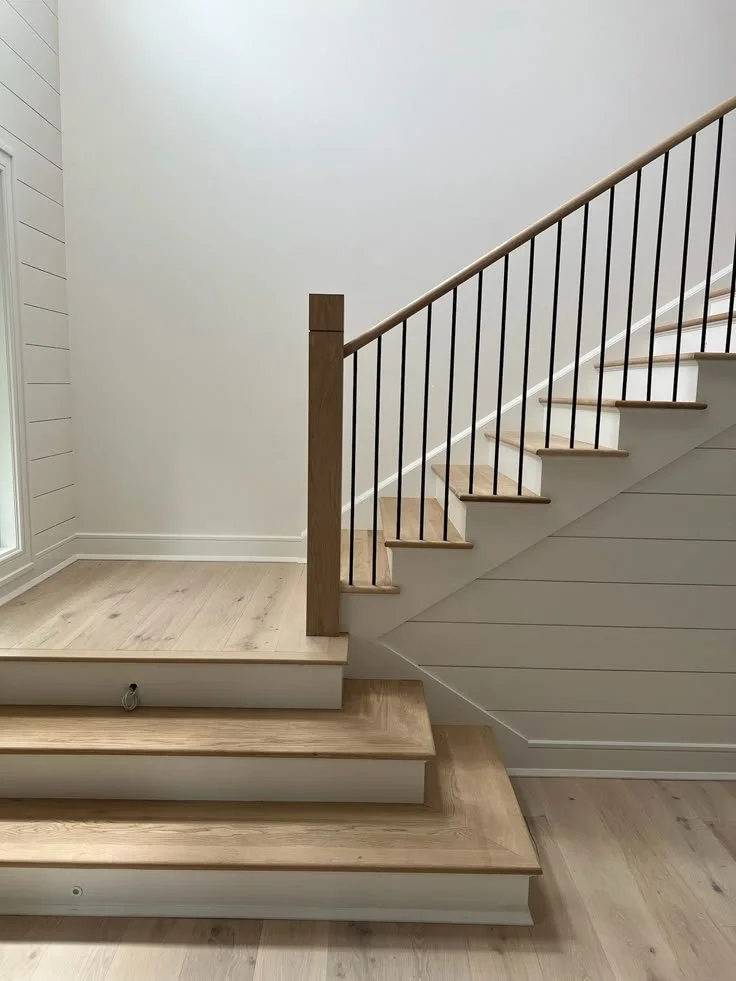
Photo Via: Stair Parts
Stair Treatment Ideas Worth Considering
Mix Your Tread and Riser Materials
The tread is the flat surface you step on. The riser is the vertical face between each step. Treating them differently is one of the most effective shifts in California contemporary interior design. Solid white oak treads with painted risers, often in a deep matte black, warm white, or a color pulled from elsewhere in the home, create a clean rhythm without looking fussy. Stone treads paired with plaster risers are another combination that works particularly well in warmer California light.
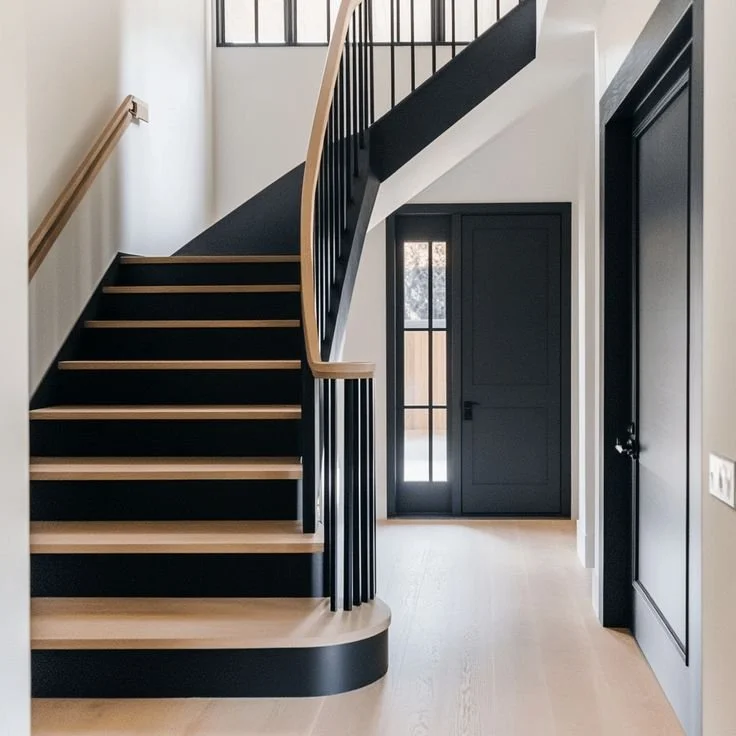
Photo Via: Home Brunch
Reconsider Your Balusters and Handrail Profile
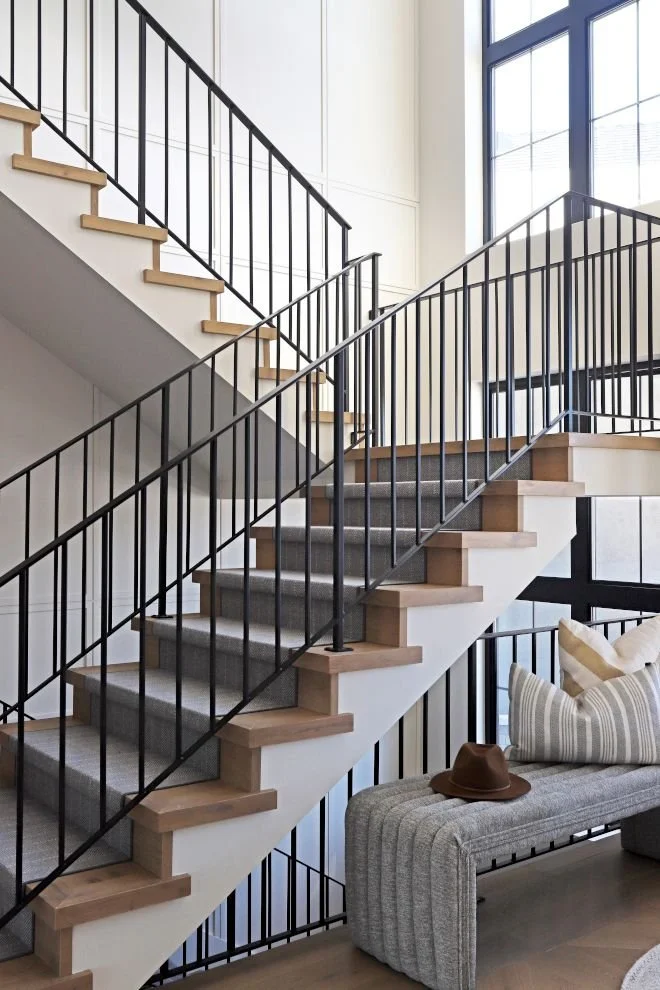
Balusters are the vertical posts that run between the handrail and the stair, and they're one of the first things a practiced eye catches when they feel generic. Bespoke interior design Los Angeles studios typically specify custom metalwork, such as flat steel plates, slender round bar in a brushed finish, or cable rail, rather than off-the-shelf turned wood. The handrail profile matters equally. A sculptural hardwood rail with a rounded underside feels entirely different from a basic stock profile, even if the overall stair footprint is identical.
Treat the Stair Wall as an Architectural Surface
The wall running alongside a staircase is one of the most underused surfaces in a home. Interior architecture Los Angeles projects increasingly use this plane intentionally, with applied paneling, limewash plaster (a textured, matte wall finish with depth and variation), a grasscloth wallcovering, or a single bold paint color that wouldn't work across an entire room. Running a horizontal ledge along the wall at handrail height also adds a detail that ties the stair to the architecture rather than separating it.
Add Integrated Lighting
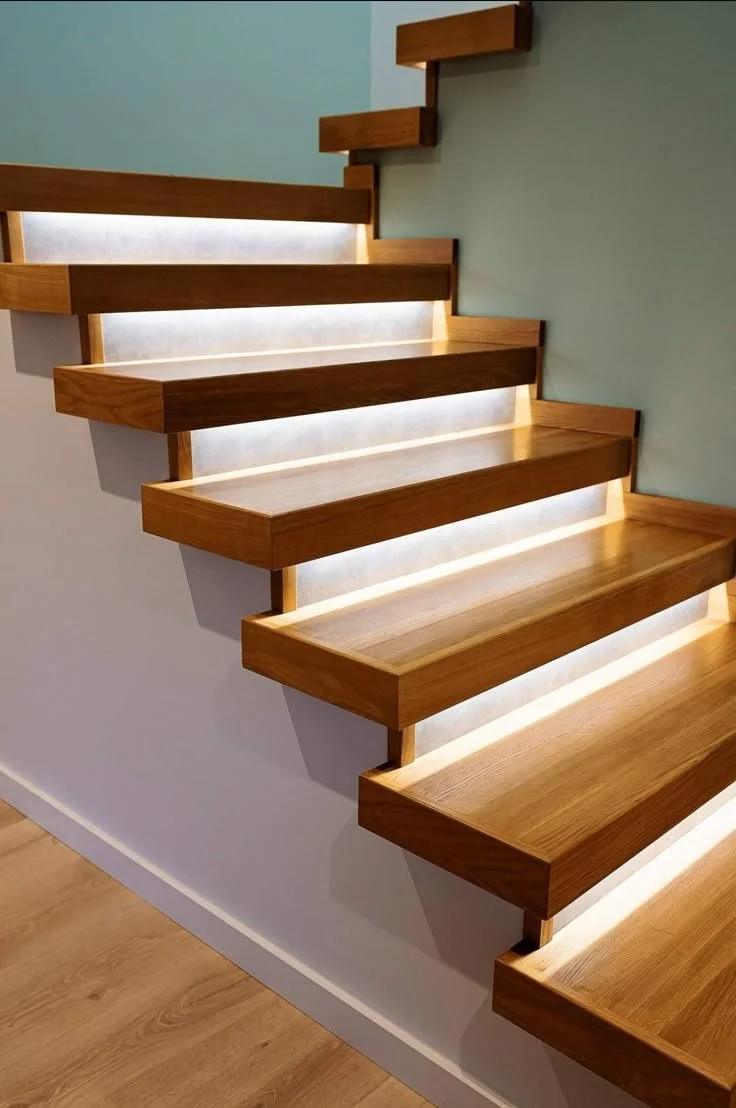
Low-voltage step lighting recessed into the riser or into the wall beside the stair is both functional and architectural. It removes the need for overhead lighting that casts unflattering shadows and creates a quality that feels considered without being decorative for its own sake. Custom home interiors Los Angeles designers often specify warm 2700K light sources here to keep the color temperature consistent with the rest of the home.
Use a Runner to Define the Palette
A stair runner is one of the higher-impact textile decisions in a home. The right one introduces pattern, texture, and color in a context where those elements are genuinely earned. Natural fiber runners in sisal, wool, or looped jute work well in homes where the luxury home renovation designer Los Angeles is building toward an organic, material-forward palette. For something more graphic, a flat-woven stripe or geometric pattern in a muted colorway can anchor the stair without competing with everything around it.
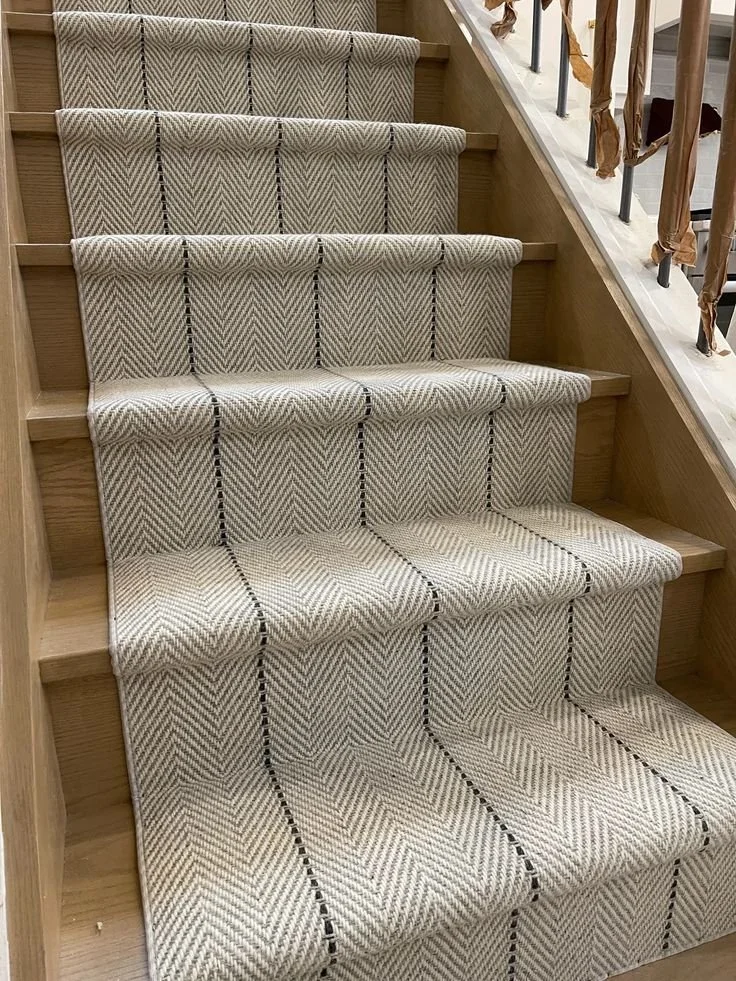
Photo Via: Tapis Rugs
A staircase designed through the lens of custom home interiors Los Angeles thinking is not about spectacle. It is about making sure every part of the house has been considered with the same eye, so that nothing feels like it was installed by a different person with a different brief.