
The Best Pool Designs for Los Angeles Homes
Choosing a pool shape in Los Angeles comes down to fit. The wrong shape can fight the house, waste space, or look oversized on a tight lot. The right one aligns with the architecture, works with the lot dimensions, and supports how you actually plan to use the pool. Modern homes, hillside properties, and Spanish-style houses each benefit from different layouts. Getting this decision right early avoids expensive redesigns later.
Pool Shapes and Designs That Suit Los Angeles Homes
Rectangular Pools for Modern and Architectural Homes
Rectangular pools work best when they are aligned directly with the house. If the home has strong horizontal or vertical lines, the pool should follow that same direction. This is why they dominate Los Angeles luxury home design trends.
A common mistake is placing a rectangular pool at an angle or offset from the structure, which breaks the visual order. Keep the width proportional to the yard. In most cases, 12 to 16 feet wide is enough for both function and balance. This shape also pairs well with the best materials for luxury homes in California climate, such as large-format stone or concrete finishes that emphasize clean edges.
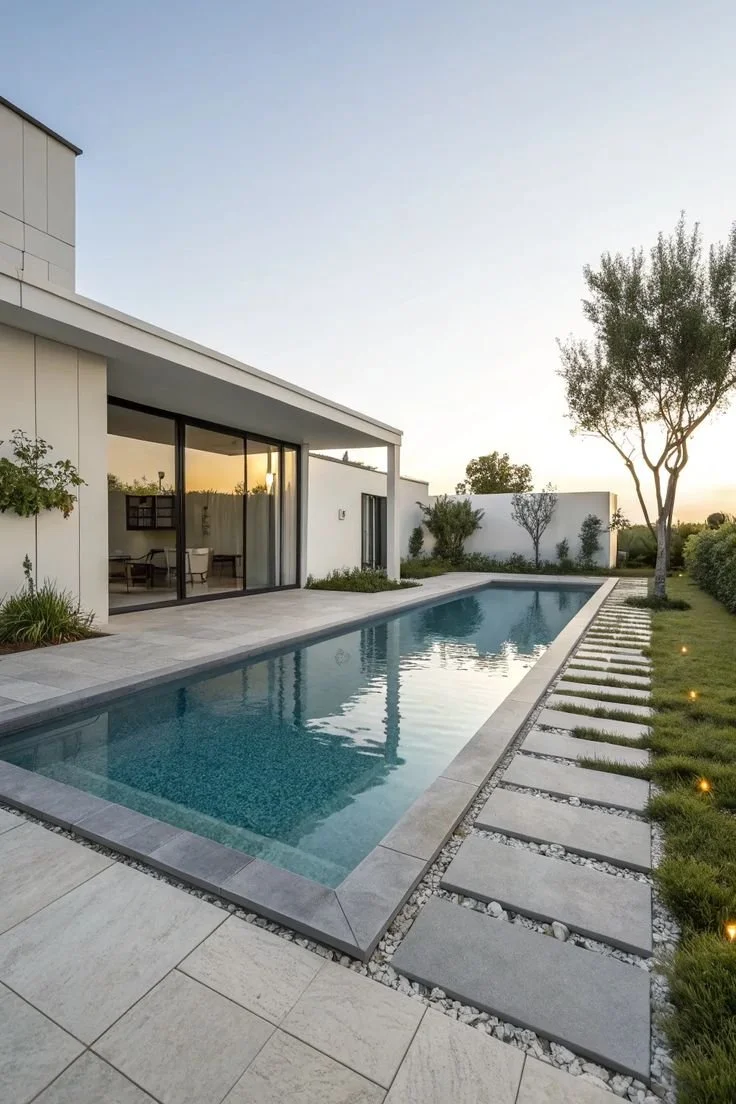
Photo Via: Small and Lovely
Lap Pools for Narrow or Linear Lots
Lap pools are the most efficient option for long, narrow spaces. They typically range from 30 to 60 feet in length but stay narrow, often under 10 feet wide. This makes them ideal for side yards or properties where width is limited.
They are a strong fit for homeowners who plan to swim regularly. In indoor-outdoor luxury living design layouts, placing the lap pool parallel to the house keeps circulation clear and avoids cutting the yard into unusable sections. Avoid widening the pool just to “fill space.” It reduces usability and disrupts the layout.
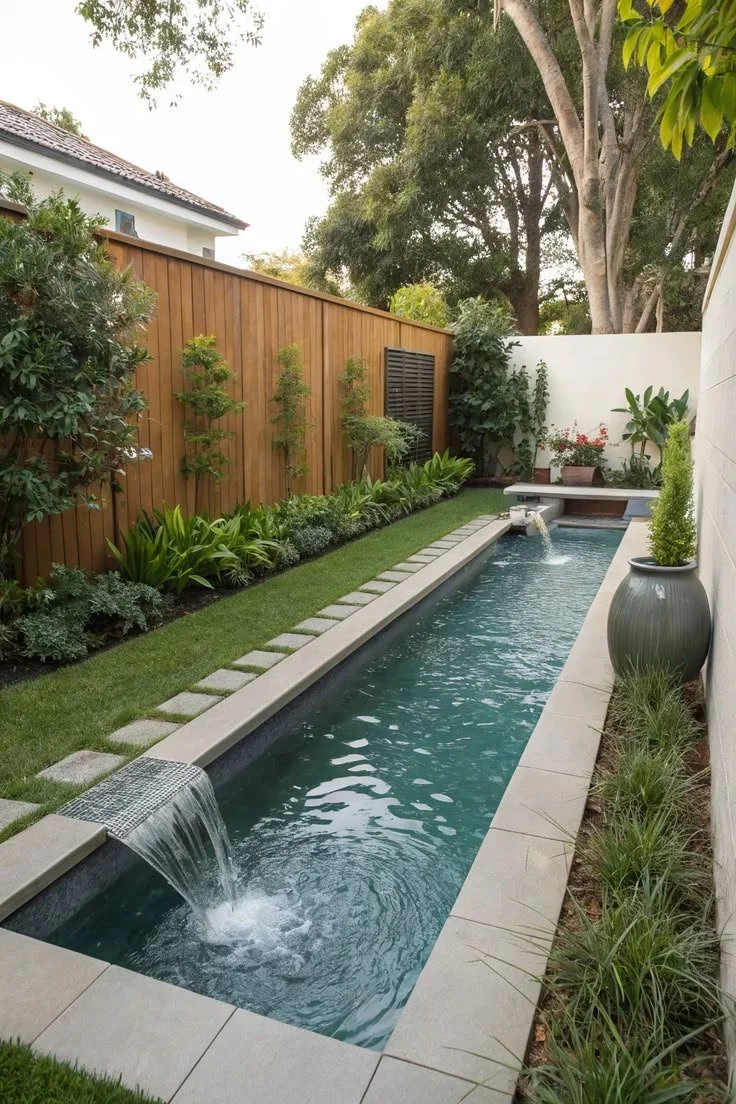
Photo Via: Garden Eco
Freeform Pools for Mediterranean and Spanish Homes
Freeform pools should follow the character of the house, not compete with it. They work best with Mediterranean luxury interiors Los Angeles and Spanish-style homes that already feature arches and less rigid geometry.
The key is restraint. Limit the number of curves and keep the outline simple. Overly complex shapes tend to look dated and take up more space than necessary. A well-designed freeform pool still has a clear structure, even if it is not rectangular.
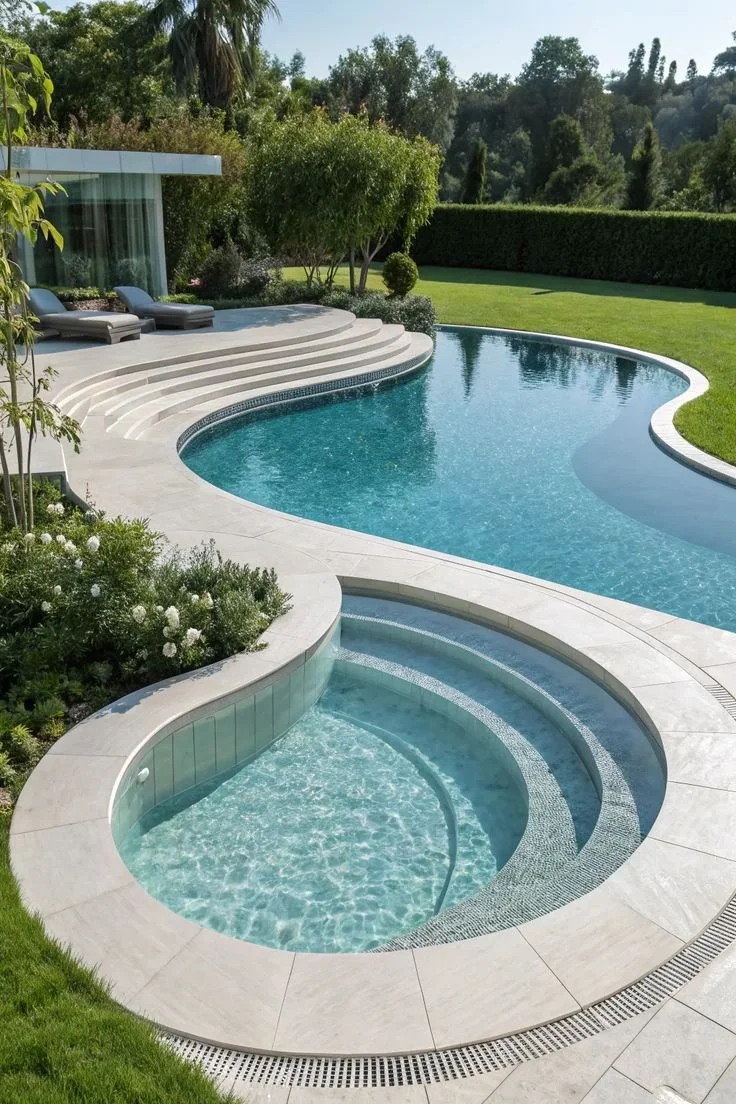
Photo Via: Garden Eco
Infinity Edge Pools for Hillside Views
Infinity edge pools only make sense when there is a view to frame. They are most effective on sloped lots where the edge can extend toward the skyline or ocean, which is why they appear in many California luxury home design trends.
On flat properties, they add cost without improving the result. If the drop-off is minimal, the edge effect is barely visible. In those cases, a standard rectangular or geometric pool is a better use of space and budget.
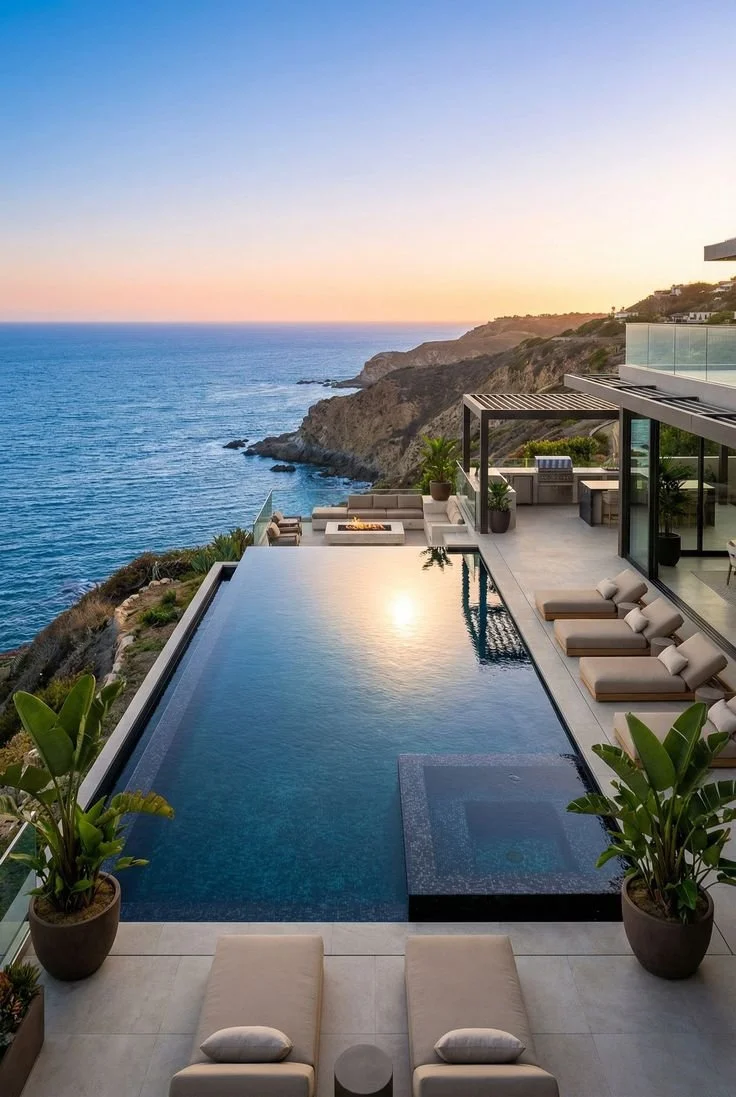
Photo Via: Home Stratosphere
Geometric Pools With Integrated Spas
If you want a spa, build it into the pool shape. A square or rectangular spa that shares the same geometry keeps the layout tight and avoids awkward gaps between elements.
Separate, add-on spas often look disconnected and take up extra room. Integrated designs work across modern and transitional homes because they maintain a clear, unified form.
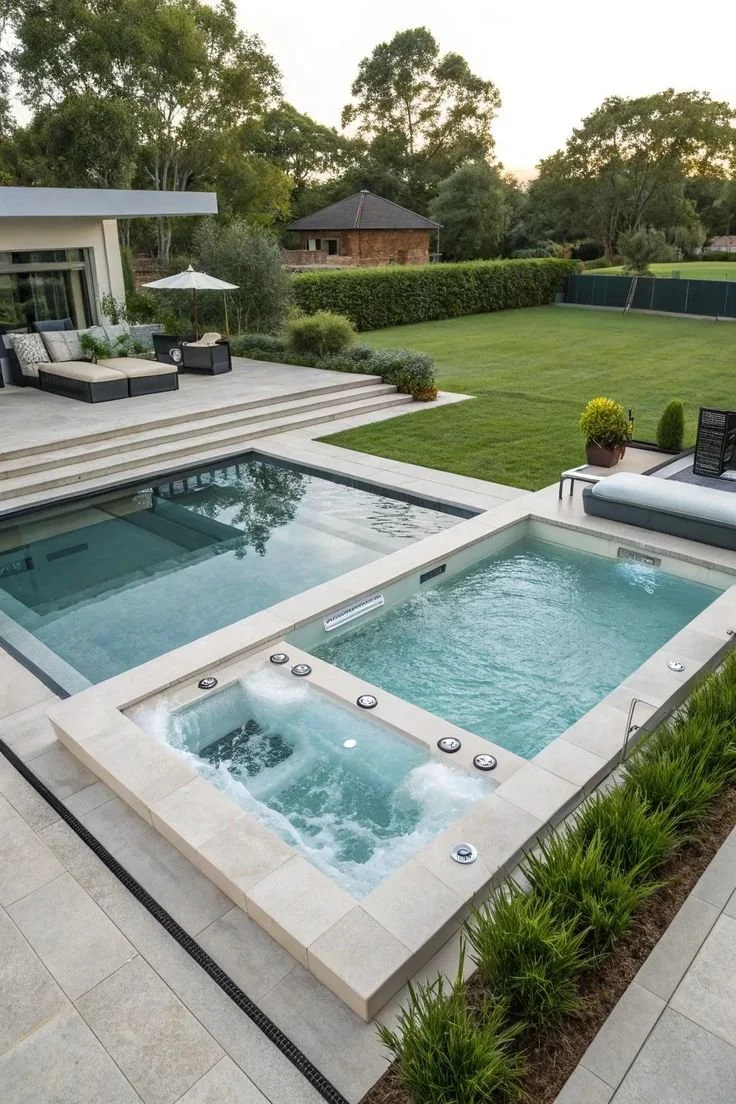
Photo Via: Garden Eco
Plunge Pools for Smaller Los Angeles Yards
Plunge pools are designed for compact lots where a full-size pool would dominate the space. Most are under 20 feet in length but still deep enough for cooling.
They work best when placed close to the house, where they can anchor the layout without breaking up the yard. This makes them a practical option for smaller properties that still want to align with Los Angeles luxury home design trends.
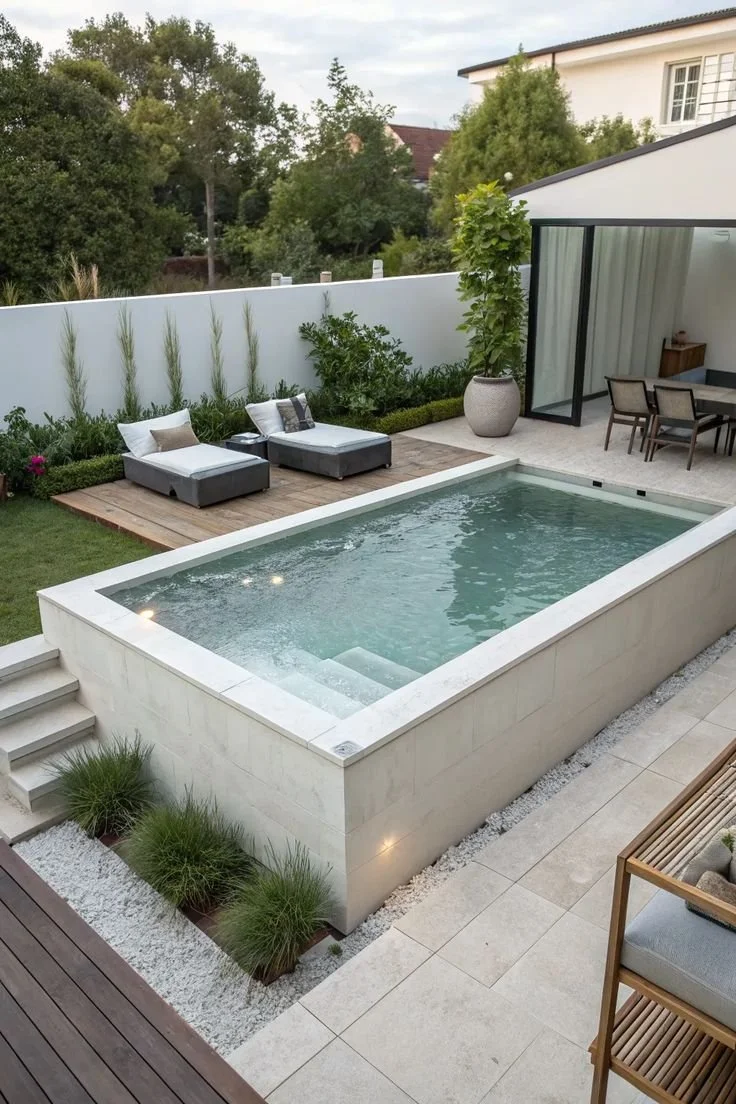
Photo Via: Garden Eco
The right pool shape depends on architecture, lot size, slope, and daily use. When those factors are considered early, the pool fits naturally and avoids costly corrections later.