
Reclaimed Wood: Where to Use It
Reclaimed wood works best when it’s limited to a few key surfaces. When it shows up on too many planes, like in the floors, walls, and cabinetry, it may start to compete with itself. The goal is contrast: place it where its texture stands out against smoother materials. In custom home interiors Los Angeles, reclaimed wood is typically used once per room, not repeated across every surface.
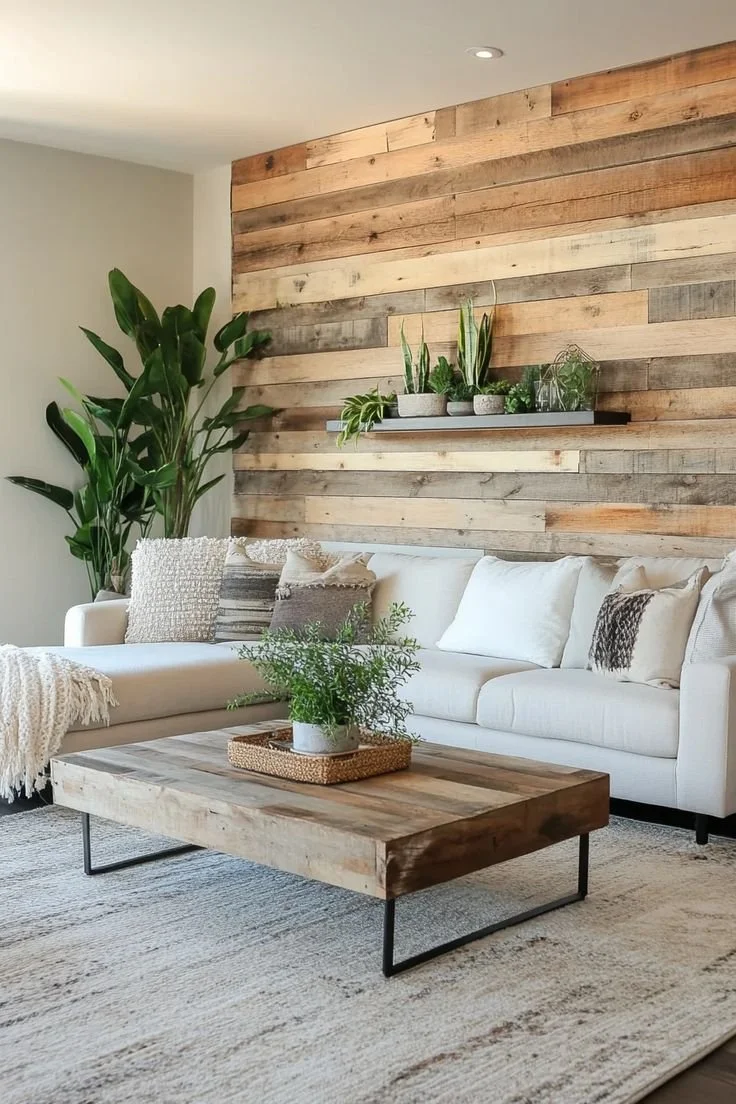
Photo Via: Spire Creativity
Reclaimed Wood: Where to Use It
Ceilings and Beams
Use reclaimed wood overhead where it won’t interfere with furniture or circulation. Beams should be sized to the room. Larger rooms can handle deeper beams (8–12 inches), while smaller rooms need slimmer profiles. Keep spacing consistent and avoid mixing different wood tones on the same ceiling. In California contemporary interior design, beams are usually aligned with the room’s geometry, not placed randomly.
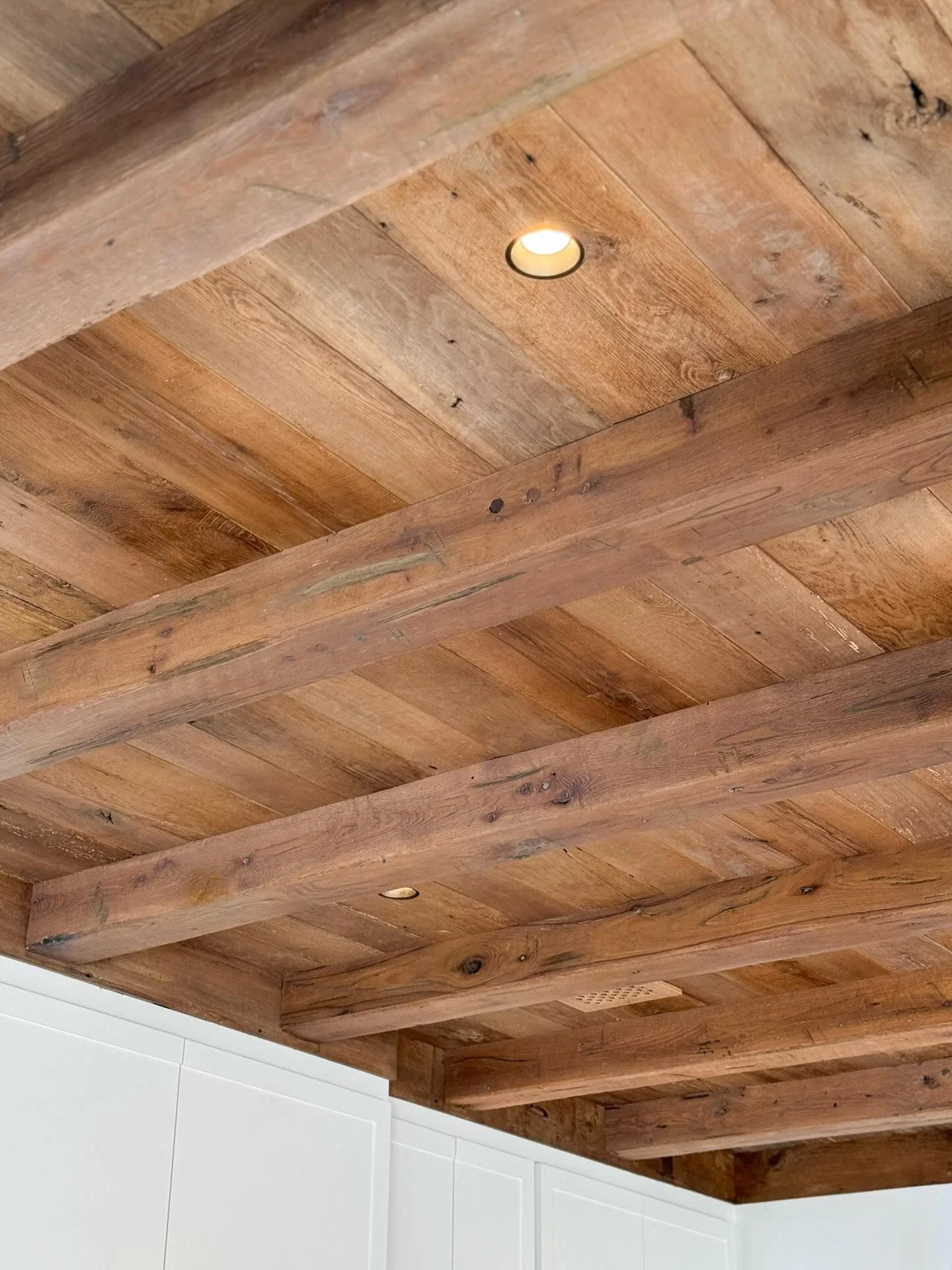
Photo Via: Charbonneau Interiors
Kitchen Islands and Shelving
Apply reclaimed wood to the island base or a single run of open shelves, not both. This keeps the kitchen from feeling heavy. Seal the surface with a matte polyurethane so it resists stains and is easy to clean. Avoid rough-sawn boards on touch surfaces; they catch grease and are hard to maintain. In bespoke interior design Los Angeles, reclaimed wood in kitchens is always smoothed and sealed, not left raw.
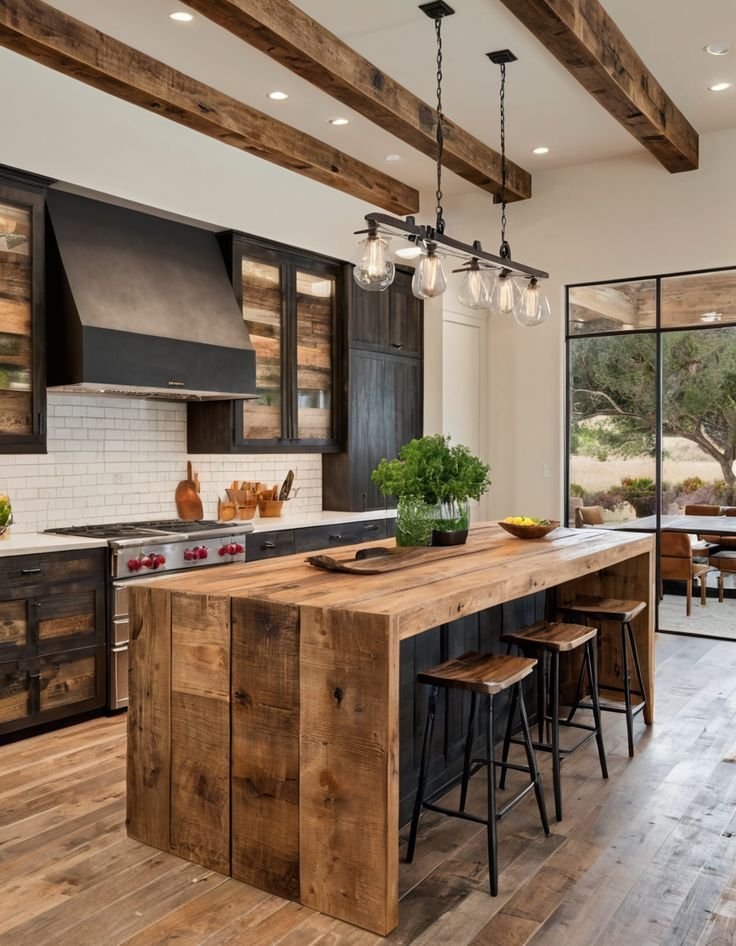
Photo Via: My Inspo
Wall Paneling and Doors
Use reclaimed wood on one wall only, and run boards in a single direction; vertical for height and horizontal for width. Keep board widths consistent (4–8 inches works well) to avoid a patchwork look. For doors, use it on larger formats like sliding or pivot doors where the scale makes sense. This approach is common in organic modern interior design Los Angeles, where natural materials are used with control.
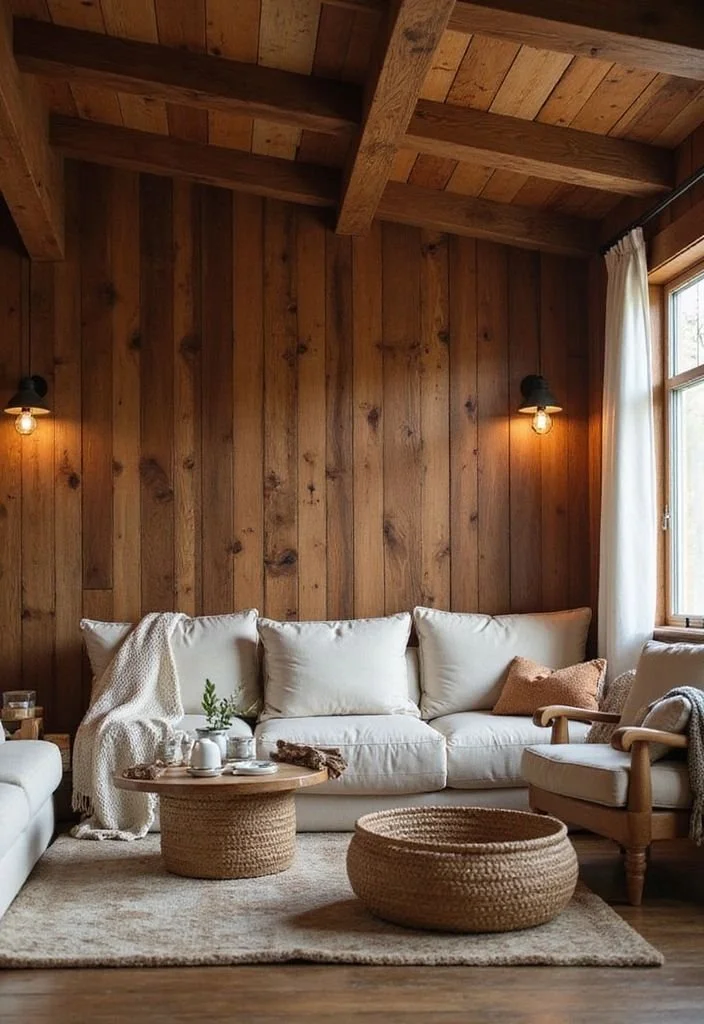
Photo Via: Aestora
Bathrooms, Floors, and Outdoor Transitions
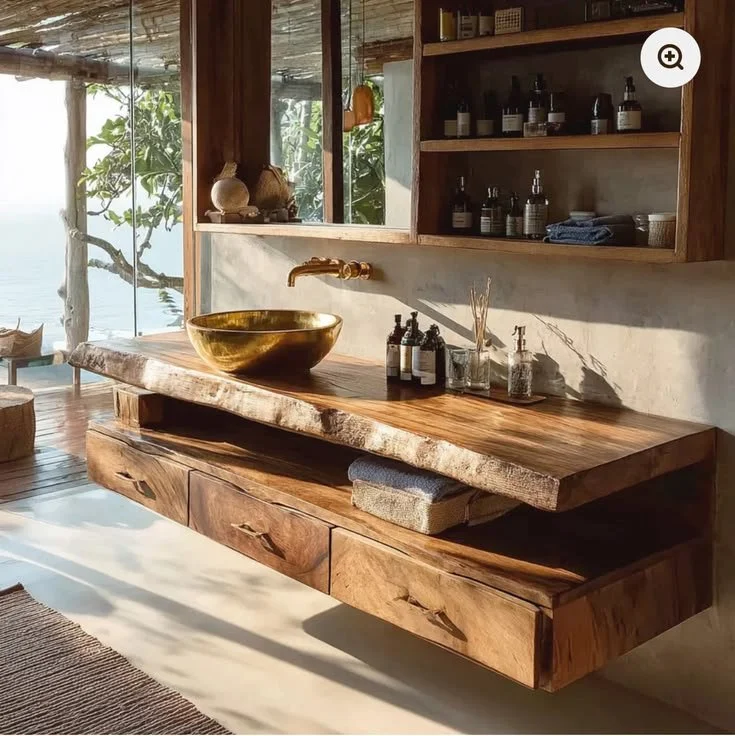
Use reclaimed wood in bathrooms only on vanities, not near showers or tubs unless fully sealed on all sides. For flooring, limit it to low-traffic areas or bedrooms; in kitchens, it wears unevenly. Choose boards that are already stabilized and kiln-dried. It also works well in covered outdoor areas, especially when matched to interior tones—one of the best materials for luxury homes in California climate when handled correctly.
Used this way, reclaimed wood adds contrast and durability without taking over the space. The key is limiting where it appears and controlling how it’s finished.