
Pool Deck Materials That Stay Cooler in Los Angeles
A pool deck can look great and still become uncomfortable by early afternoon. In Los Angeles, surface temperature matters just as much as appearance, especially for homeowners with children, pets, or outdoor spaces that stay exposed to direct sun most of the day.
Some dark stone materials become difficult to walk on barefoot within hours of sun exposure. Smooth surfaces can also become slippery around saltwater or chlorine pools. The best pool deck materials balance heat control, traction, durability, drainage, and long-term maintenance instead of focusing only on appearance.
That is why many current Los Angeles luxury home design trends are shifting toward lighter, textured outdoor surfaces that stay usable during hotter months.
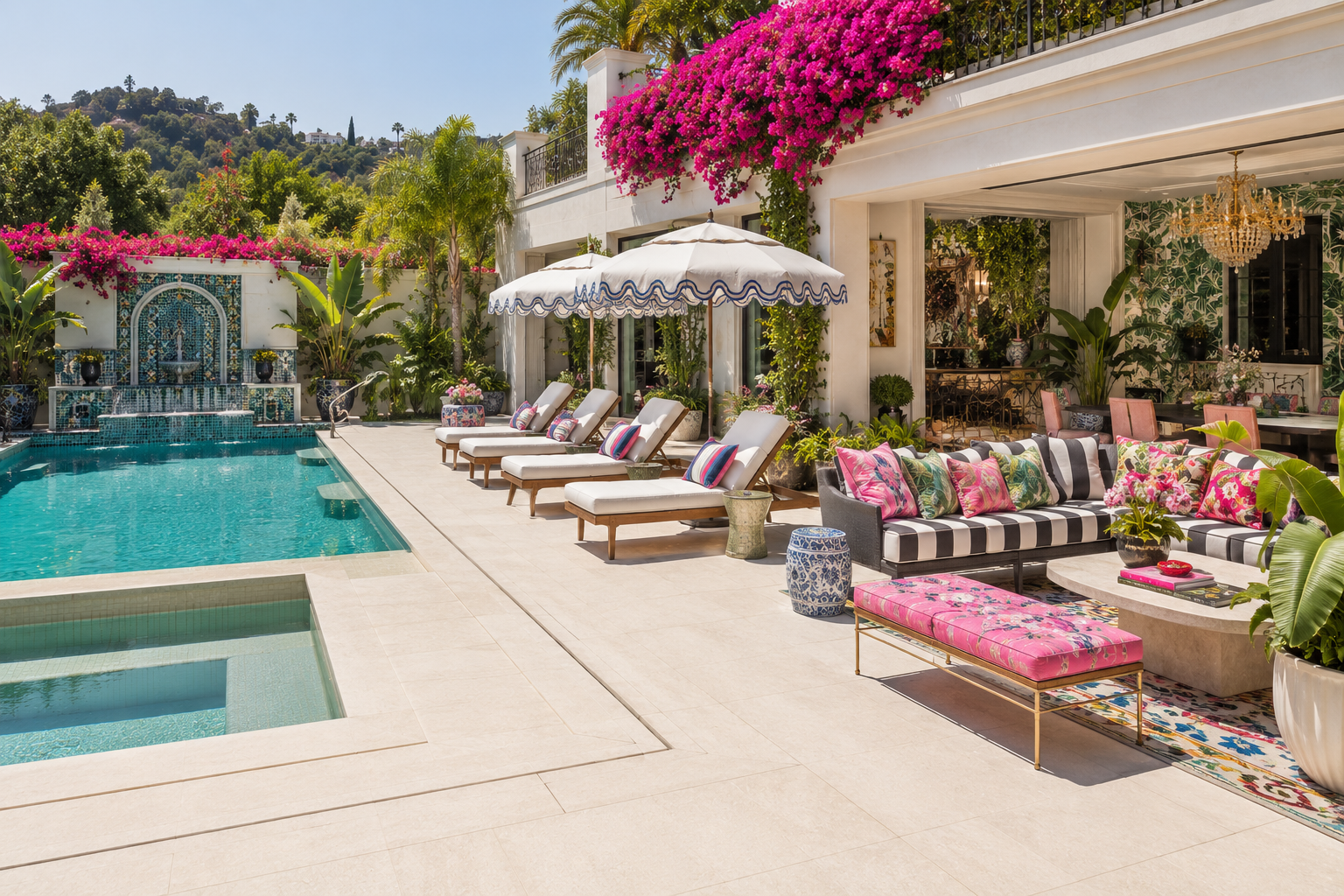
Cooler Pool Deck Material Options for Los Angeles Homes
Travertine Is Popular Because It Stays More Comfortable Underfoot
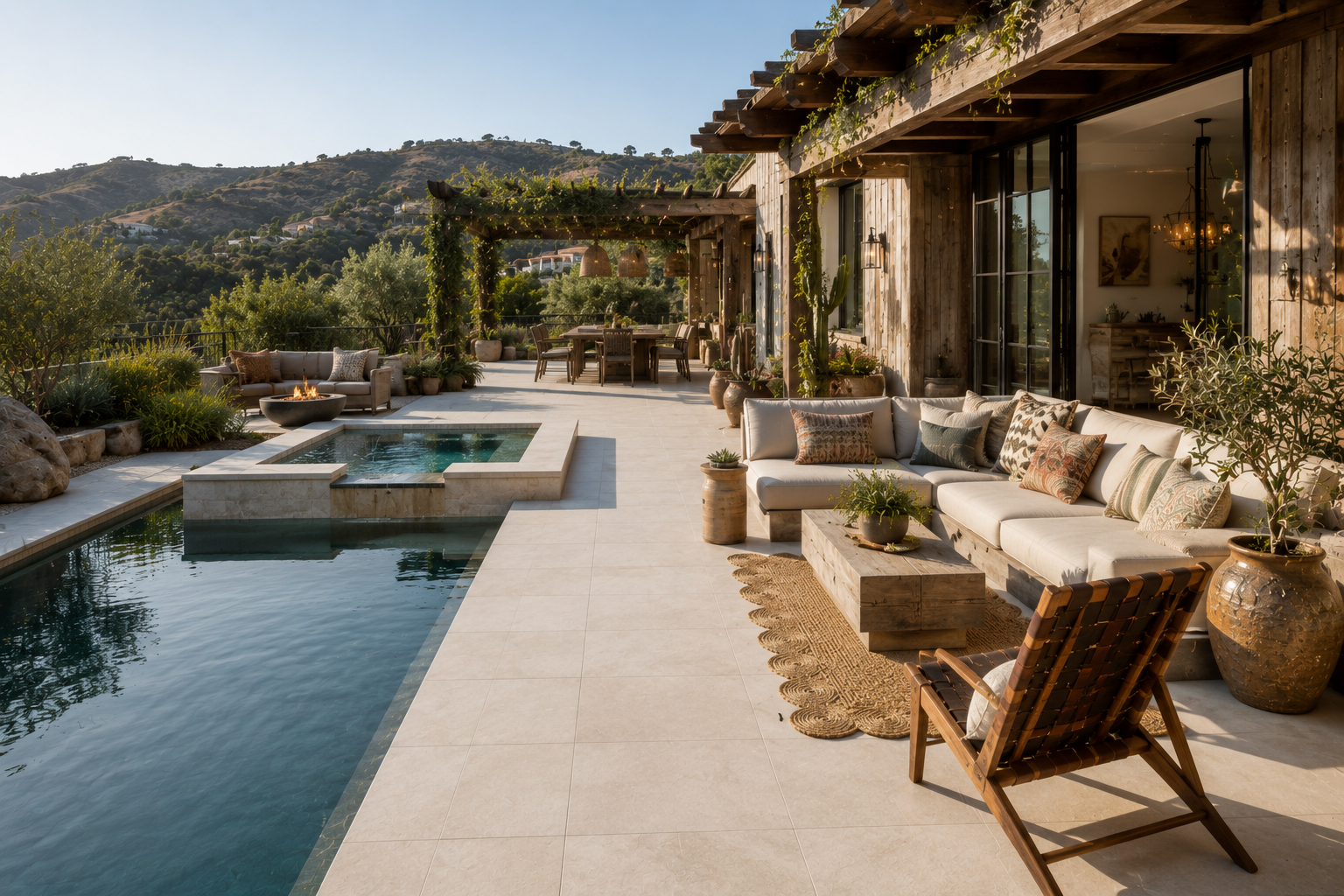
Travertine remains one of the most common pool deck choices in Southern California because lighter varieties typically absorb less heat than dense dark stone. It also provides better barefoot comfort during peak afternoon temperatures.
Textured travertine can improve traction around wet pool edges, though sealing still matters for stain resistance and long-term durability. Homeowners with saltwater pools should also confirm the stone is rated for exterior exposure and pool chemicals.
Many designers consider travertine one of the best materials for luxury homes in California climate because it handles heat well while fitting a wide range of architectural styles.
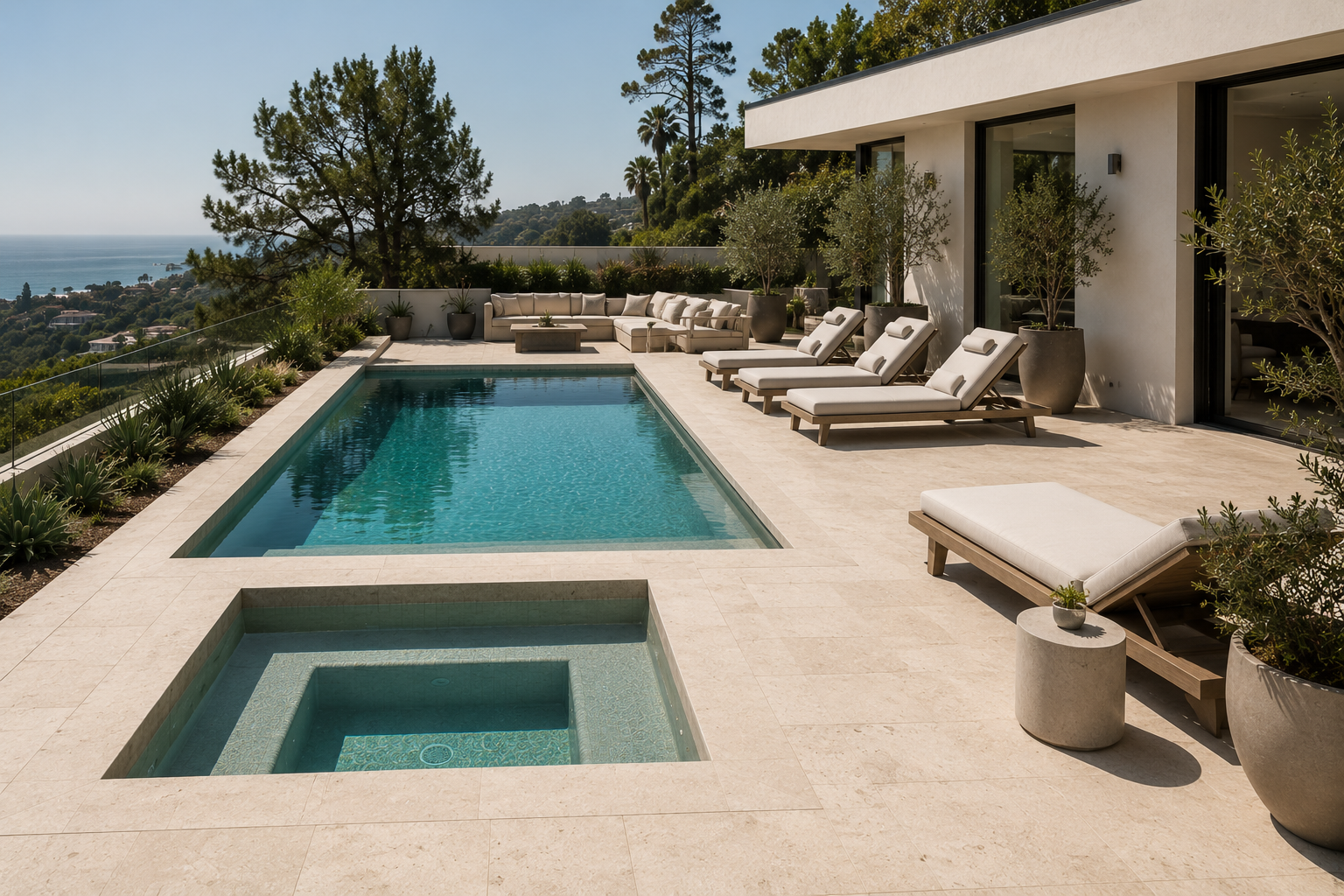
Light Porcelain Pavers Can Reduce Heat and Maintenance
Outdoor-rated porcelain pavers are becoming more common in newer California luxury home design trends, especially for homeowners who want easier maintenance and consistent color.
Lighter porcelain finishes generally stay cooler than darker options, and many products now include slip-resistant textures designed specifically for wet outdoor areas. Porcelain also resists staining better than many natural stones and handles chlorine exposure well.
Drainage planning still matters. Poor water runoff can create slippery areas even with textured materials.
Textured Concrete Works Better With the Right Finish
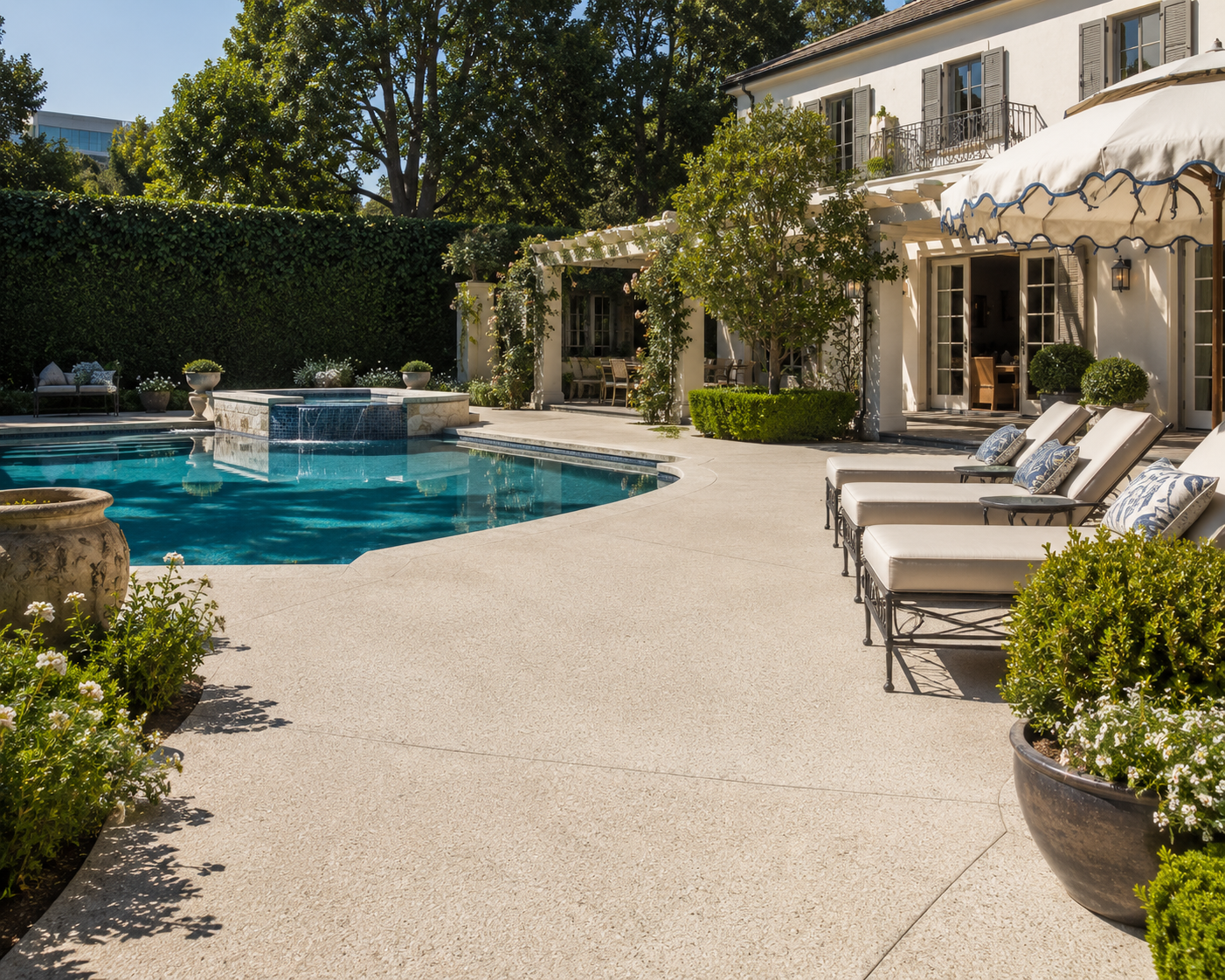
Concrete can work well around pools, but color and surface finish make a major difference. Dark gray concrete absorbs far more heat than sand-colored finishes. Smooth troweled concrete also becomes more slippery once wet.
Textured finishes like light broom concrete or exposed aggregate usually perform better for traction and glare reduction. This practical approach fits many indoor-outdoor luxury living design projects where outdoor areas need to feel comfortable for daily use instead of only looking clean in photos.
Limestone Requires More Maintenance Awareness
Limestone can create a refined pool deck appearance, but homeowners should understand the maintenance requirements before installation. Some limestone varieties stain more easily and need sealing to handle pool chemicals and outdoor moisture properly.
The same level of care used when selecting stone slabs for a high-end kitchen should apply to exterior stone choices around a pool. Surface texture, porosity, and heat retention all affect long-term performance.
Avoid very dark limestone or slate around full-sun pool decks. These materials often become too hot for comfortable barefoot use during Los Angeles summers.
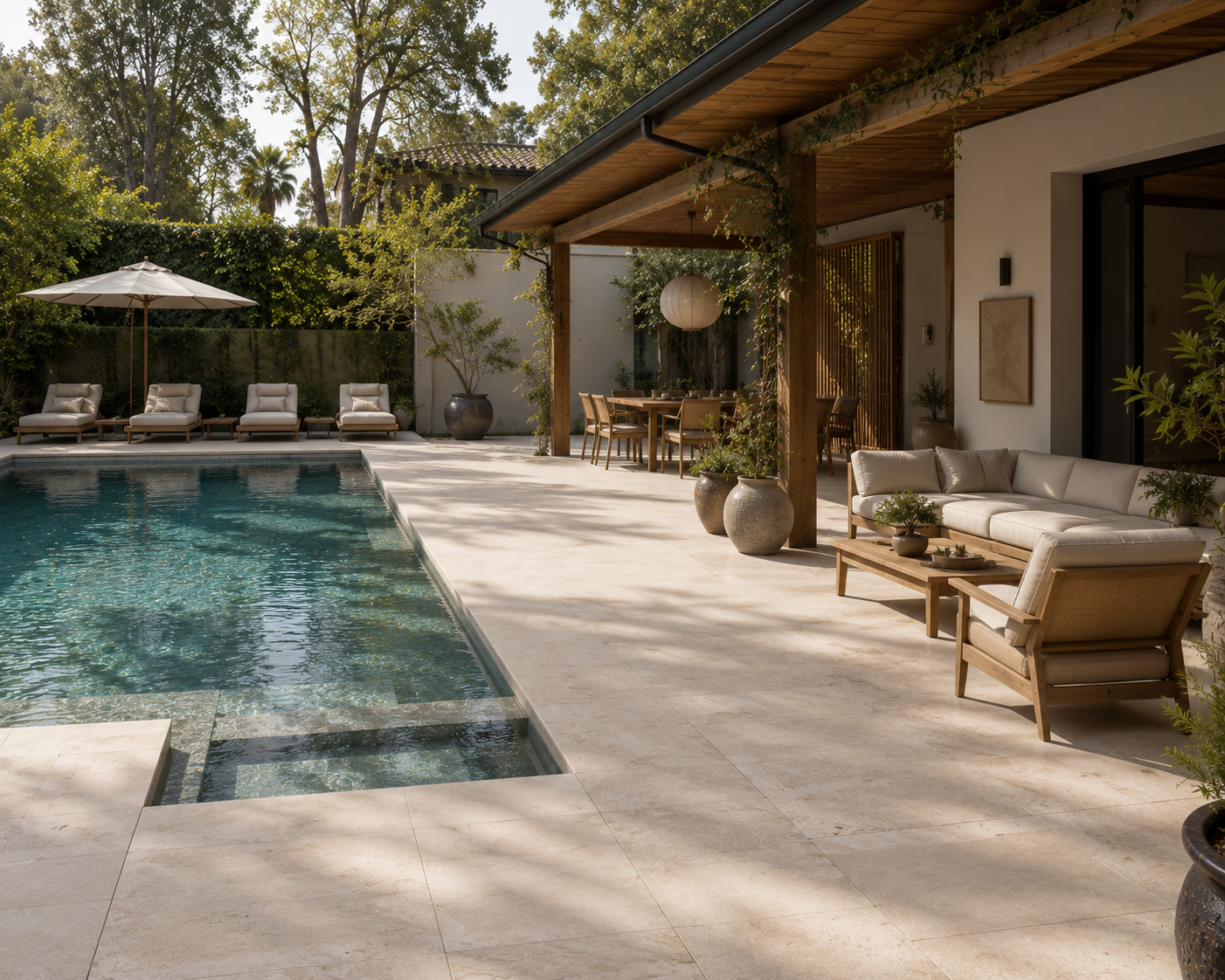
The best pool deck surface is the one homeowners can comfortably use throughout the day. In Los Angeles, lighter colors, textured finishes, and proper drainage usually outperform dramatic dark materials once summer heat becomes a daily factor.