
How to Frame Your Art Right
Most framing mistakes come down to proportion and placement. Frames that are too thick, mats that are too narrow, or artwork hung too high will make even strong pieces look off. In art curation for luxury homes, framing decisions need precision. They should relate to the artwork, the wall, and the room around them.m.
Start With the Art, Not the Frame
Identify the medium and scale first. Works on paper (photography, drawings) usually need a mat; paintings and canvas pieces often don’t. If the artwork is under 24 inches wide, use a mat to give it more visual weight on the wall. For larger pieces, mats are often unnecessary, and a simple frame usually gives the artwork more clarity In custom home interiors Los Angeles, mixing matted and unmatted pieces is common, but each choice is deliberate.

Photo Via: Southern Living
Choose Frame Width and Finish Based on Scale
Use frame width as a scaling tool:
Small works (under 16 inches): ½–1 inch frame
Medium works (16–36 inches): 1–1.5 inch frame
Large works (over 36 inches): 1.5–3 inch frame
Avoid thick frames on small art because they may overpower the piece. Stick to simple finishes: black, natural oak, or brushed metal. Don’t mix warm and cool metals within the same grouping. In bespoke interior design Los Angeles, consistency in frame finish keeps collections cohesive.
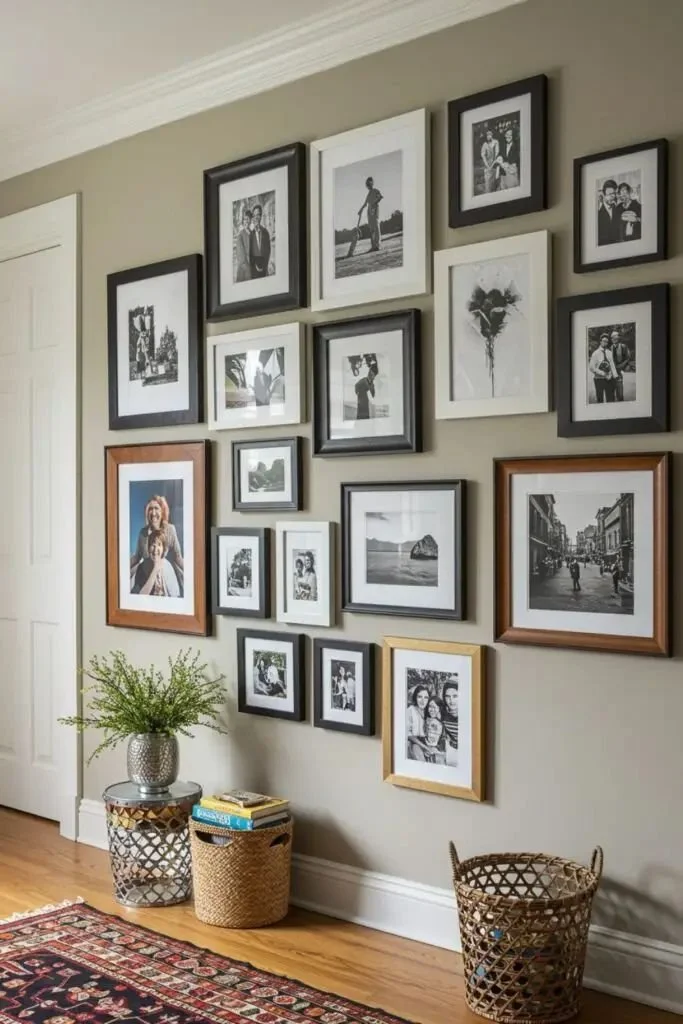
Photo Via: Wealthy Click
Use Matting and Glass With a Purpose
For matted pieces, use wider mats than you think—2.5 to 4 inches works for most small to medium art. Narrow mats make the piece feel compressed. Keep mat color white or off-white; avoid bright white against warm-toned paper. Always use low-reflective or museum glass in bright rooms. In California contemporary interior design, this is essential due to strong daylight exposure.
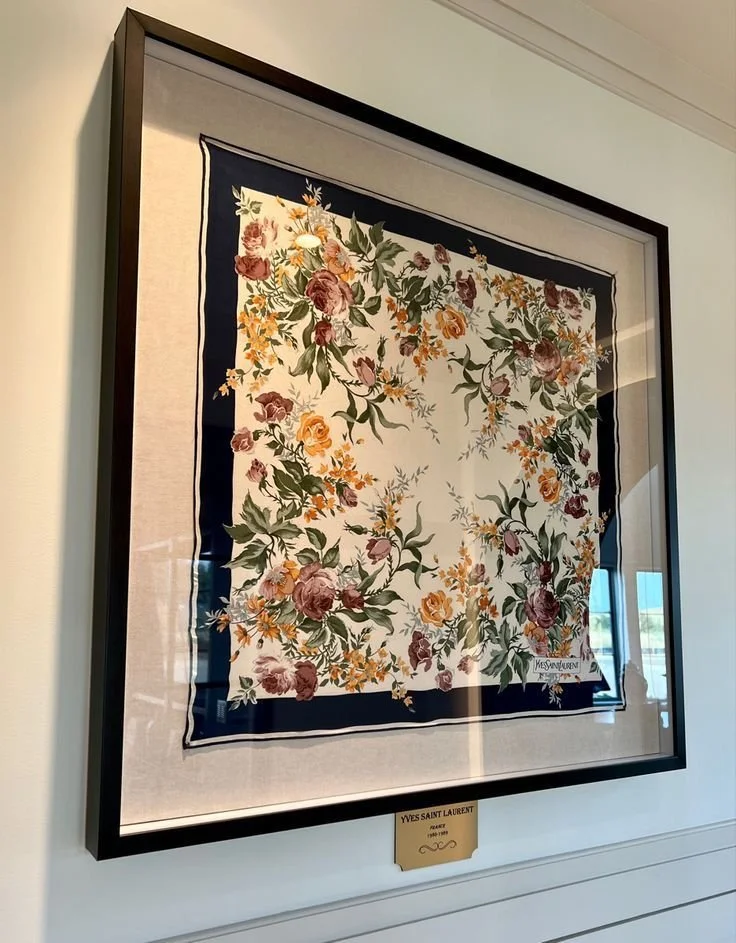
Make the Frame Work With the Room
Match the frame to dominant finishes nearby. If the room has warm wood flooring, use warm wood or black frames, not cool grey tones. If there’s a lot of metal (lighting, hardware), repeat that finish in a controlled way. In European-inspired interiors Los Angeles, slimmer profiles and restrained detailing typically fit better than ornate frames.
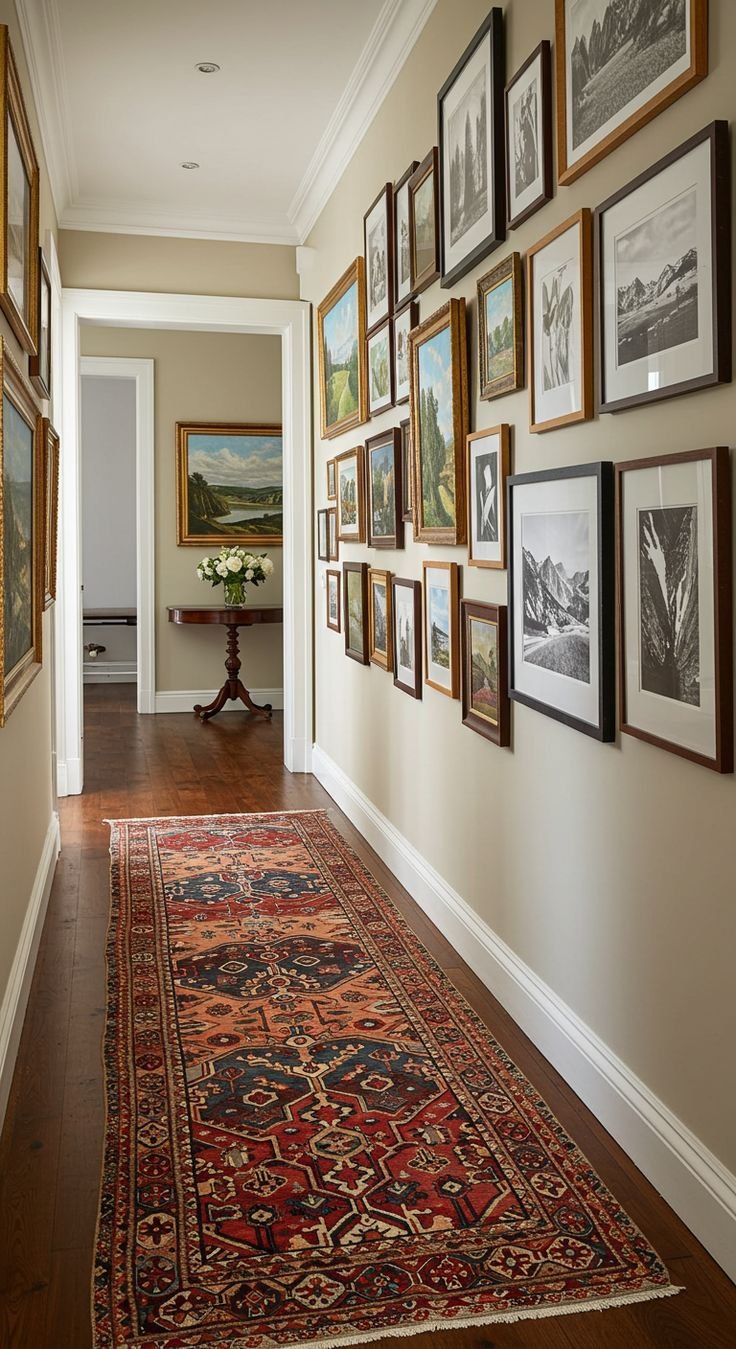
Hang It Properly So It Looks Considered
Use consistent placement rules:
Center of artwork: 57–60 inches from the floor
Above furniture: 6–10 inches from the top of the piece below
Groupings: treat as one unit and align outer edges
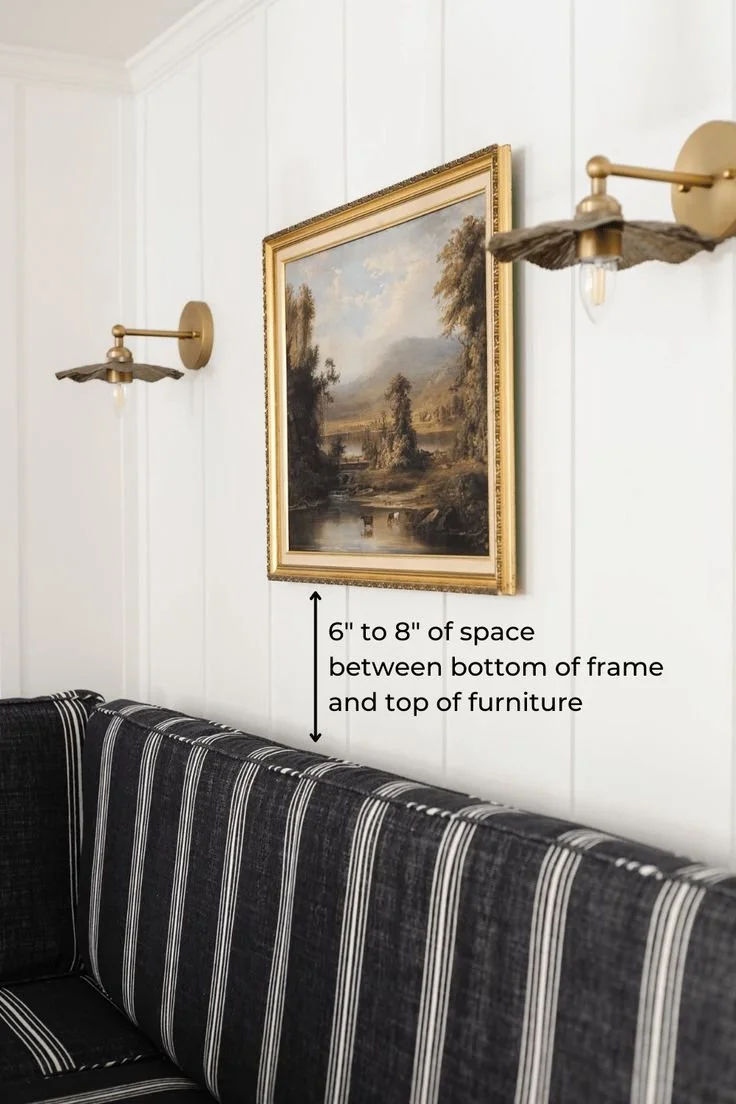
Photo Via: Blesser House
Do not hang based on ceiling height. That is one of the most common reasons artwork ends up hanging too high.